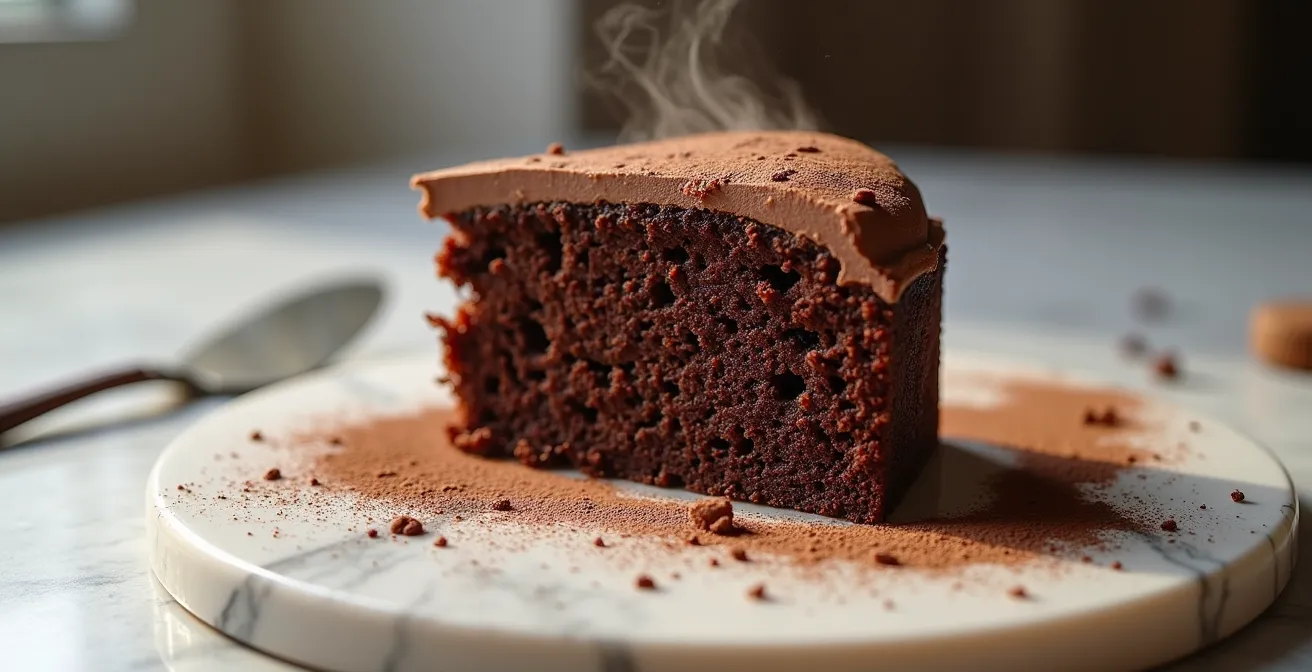
The frustration of a dry, sandy gluten-free cake isn’t a baking failure; it’s a scientific problem of moisture management. The lack of gluten creates an unstable structure prone to water loss. The solution lies in building a robust “hydration network” by mastering the technical synergy between the right flour blend, a precise amount of a binder like xanthan gum, and the strategic use of moisture-locking ingredients like oils and liquid sugars. This guide provides the technical framework to control texture and banish dry cakes for good.
You followed the recipe to the letter. You measured with precision, mixed with care, and watched the oven like a hawk. Yet, the result is disappointingly familiar: a gluten-free cake that’s dry, crumbly, and has a texture closer to sand than sponge. This experience is the shared frustration of countless home bakers. It’s the reason many give up, assuming that delicious, moist gluten-free baking is an impossible art form reserved for specialty bakeries.
The common advice is often a list of simple fixes: “add more liquid,” “don’t overbake,” or the ubiquitous “use xanthan gum.” While not incorrect, these tips are just single pieces of a much larger puzzle. They treat the symptom—dryness—without addressing the root cause: the molecular battle for moisture happening inside your batter. A truly great gluten-free cake doesn’t happen by accident; it’s engineered.
But what if the key wasn’t just adding an ingredient, but understanding its function? What if you could control the final texture by mastering the interplay between starches, fats, sugars, and binders? This is where we move beyond generic advice. The true secret to a moist gluten-free cake is not a magic ingredient, but the technical knowledge to build a stable hydration network that mimics the properties of gluten, effectively trapping moisture within the crumb.
This article will deconstruct the science of gluten-free baking. We will explore the precise function of each component, from flour ratios to the molecular action of xanthan gum. We’ll uncover why gluten-free goods go stale so quickly and how to stop it. By the end, you will have a technical, solution-oriented framework to troubleshoot any recipe and consistently produce cakes that are tender, moist, and structurally sound.
To navigate this technical deep-dive, we’ve structured the guide to build your expertise from the ground up. The following sections will equip you with the knowledge to diagnose and solve the core challenges of gluten-free baking.
Summary: Your Gluten-Free Cake Is Dry. Here’s the Science of Why (and How Xanthan Gum Fixes It).
- Rice, Potato, Tapioca: The 60-40 Ratio for Perfect All-Purpose Mixes
- The Toaster Trap: How to Share a Kitchen with a Gluten Eater Safely?
- Soy Sauce and Soup Stocks: The Sneaky Sources of Gluten You Missed
- Why Does Gluten-Free Bread Go Stale in 24 Hours?
- Oats are Gluten-Free, So Why Do They Make Me Sick?
- Reverse Osmosis vs Carbon: Which Filter Removes Microplastics Best?
- The Scheduling Hack to Bake 20 Loaves in a Domestic Oven
- Butter Temperature: The Secret Variable That Defines a Flaky Croissant
Rice, Potato, Tapioca: The 60-40 Ratio for Perfect All-Purpose Mixes
The foundation of any successful gluten-free bake is the flour blend. Unlike wheat flour, which is a single, versatile ingredient, gluten-free baking requires a team of flours and starches working in synergy. A common mistake is using a single-ingredient flour like only rice or almond flour, which inevitably leads to a poor texture. The key is a balanced ratio, with the classic starting point being a 60/40 split: 60% whole-grain flours for structure and 40% starches for lightness and binding.
Each component has a specific technical function in building the cake’s structure. White and brown rice flours provide a neutral-tasting, protein-rich base that creates the main body and crumb. Potato starch (not flour) adds tenderness and acts as a binder, contributing to a softer texture. Finally, tapioca starch imparts a desirable chewiness and elasticity, mimicking some of the stretch that gluten would normally provide. Understanding these roles allows you to move beyond simply following a recipe to actively engineering the texture you desire.
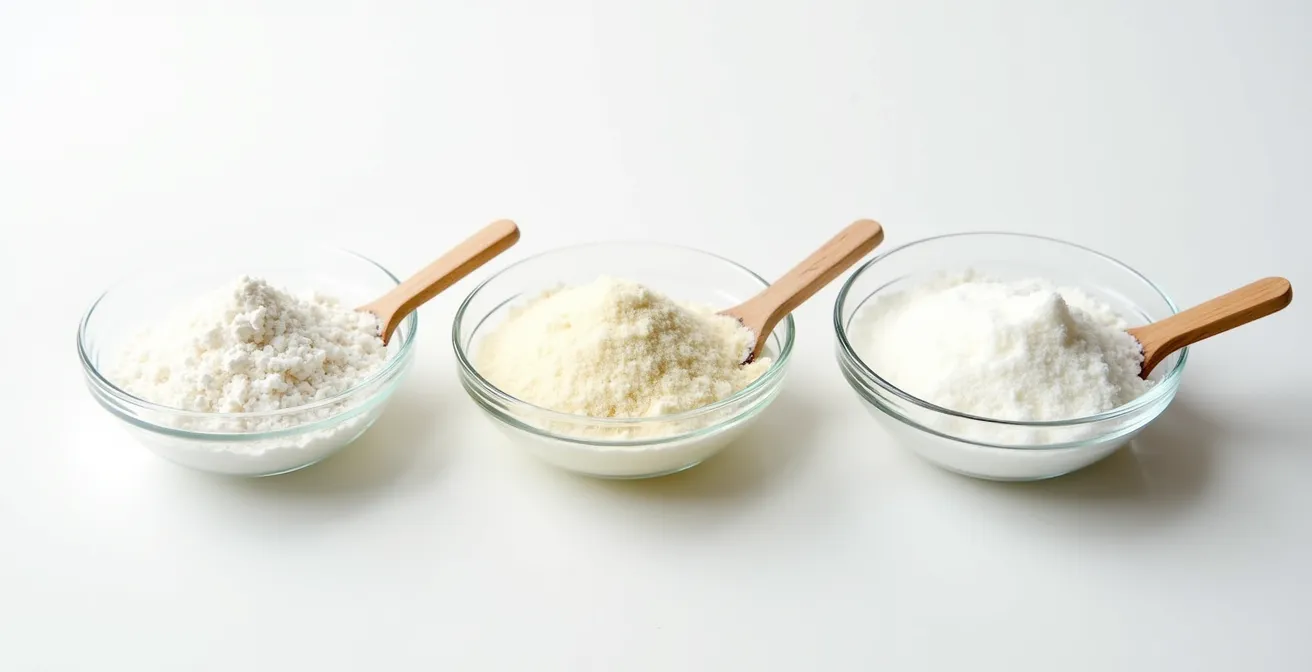
As you can see, each powder has a distinct texture, which translates directly to its function in the final bake. Mastering the blend is the first step in creating a stable hydration network capable of holding moisture. While a 60/40 ratio is a robust starting point for cakes and cookies, the exact percentages can be adjusted based on the desired outcome, as shown in the comparative analysis below.
This table outlines how adjusting the ratios of these core components can modify the final texture for different baking applications.
| Component | Traditional Ratio | High-Protein Variant | Function |
|---|---|---|---|
| Rice Flour (White/Brown) | 60-65% | 45% white + 35% brown | Structure & neutral base |
| Potato Starch | 20-30% | 10% | Tenderness & binding |
| Tapioca Starch | 10-15% | 5-10% | Chewiness & elasticity |
By controlling the flour blend, you are taking the first and most critical step in controlling the architecture of your cake, setting the stage for effective moisture retention.
The Toaster Trap: How to Share a Kitchen with a Gluten Eater Safely?
For individuals with Celiac disease or severe gluten intolerance, baking a perfectly moist cake is secondary to ensuring it is 100% free from cross-contamination. A shared kitchen can be a minefield of hidden gluten, where microscopic crumbs from a toaster, cutting board, or airborne flour can compromise an entire dish. The “toaster trap” is a classic example: using the same toaster for regular and gluten-free bread is one of the most common ways to induce a reaction. Safety requires a systematic and disciplined approach.
The core principle is segregation. Gluten-free ingredients, tools, and preparation surfaces must be kept entirely separate from their gluten-containing counterparts. This isn’t about general cleanliness; it’s about creating a controlled environment. For instance, storing gluten-free flours in sealed containers on shelves *above* regular flour prevents airborne particles from settling downwards. Wiping a counter is insufficient; it must be cleaned with a wet cloth and dedicated sponge to physically remove gluten proteins rather than just spreading them around.
The effectiveness of these protocols is not just anecdotal. A systematic approach to kitchen organization is clinically proven to be highly effective. In fact, research shows that a successful household management plan with dedicated preparation zones can be incredibly impactful. One 2021 study on Celiac disease management found that properly implemented protocols can lead to a reduction in cross-contamination incidents by up to 90%. This underscores the need for strict, non-negotiable rules in a shared kitchen environment.
To implement this, it’s best to use a clear set of rules. Designate a specific area of the counter for gluten-free prep. Use color-coded tools (e.g., a purple cutting board) or clearly labeled containers. When cooking multiple dishes, always prepare the gluten-free meal first to minimize the risk of accidental exposure from shared utensils or splatters.
Ultimately, a safe kitchen is the prerequisite for any gluten-free baking. Without it, even the most technically perfect cake is a potential health risk.
Soy Sauce and Soup Stocks: The Sneaky Sources of Gluten You Missed
While bakers are hyper-aware of flour, gluten’s reach extends far beyond the baking aisle. Many of the driest, most disappointing gluten-free results come not from the cake recipe itself, but from an unintended reaction to hidden gluten from another source, causing inflammation that makes one more sensitive to minor textural imperfections. Seemingly innocuous pantry staples are often the culprits, containing wheat as a thickener, filler, or fermentation agent. This is where a baker must become a detective, scrutinizing labels for hidden trespassers.
Soy sauce is a primary offender. Traditional soy sauce is brewed from a mash of soybeans and roasted wheat, making it a significant source of gluten. For a safe alternative, bakers must look for tamari, which is typically made only from soybeans, or a product explicitly labeled “gluten-free.” Similarly, soup stocks, bouillon cubes, and gravy mixes frequently use wheat flour or modified wheat starch as a thickener to achieve a desirable viscosity. Even “natural flavorings” can be a smokescreen for barley or wheat derivatives.
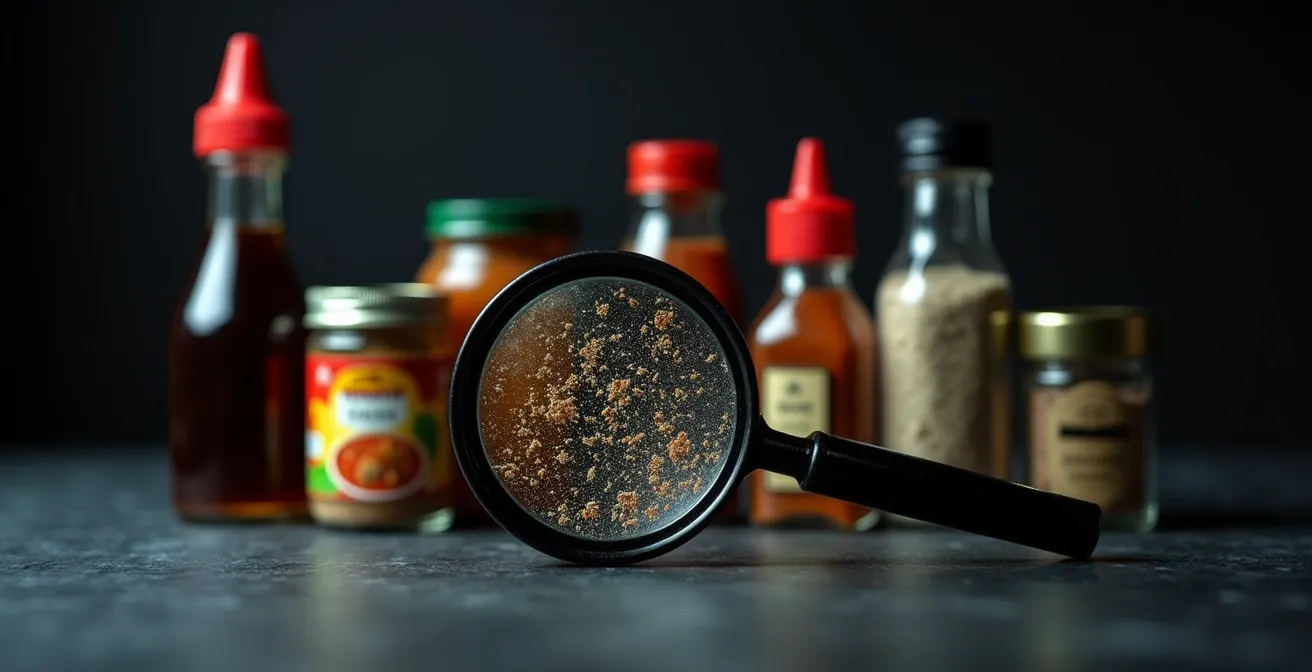
The challenge is that these ingredients are not always obvious. A magnifying glass becomes a metaphorical necessity, as shown above. Spice blends, for example, often use wheat flour as an anti-caking agent to keep the mix free-flowing. Salad dressings, marinades, and even some types of vinegar can contain hidden gluten. The only foolproof method is to read every label, every time, and opt for products certified gluten-free whenever possible. This vigilance protects your health and ensures that your baking efforts aren’t sabotaged by an unexpected ingredient.
This level of scrutiny is essential because even trace amounts can impact those with high sensitivity, and it helps maintain a “clean” palate to properly assess the texture of your bakes. A baker battling low-grade inflammation from a hidden source might perceive a perfectly moist cake as “off” or heavy.
By eliminating these sneaky sources, you create a truly controlled baseline, allowing you to focus purely on the structural science of your cake.
Why Does Gluten-Free Bread Go Stale in 24 Hours?
The notoriously short shelf life of gluten-free baked goods is a direct consequence of a scientific process called starch retrogradation. In simple terms, this is the science of staling. When a cake or bread is baked, the starch granules in the flour absorb water and swell up, creating a soft, moist structure. However, as the product cools and ages, these starch molecules begin to recrystallize, squeezing the water out of their matrix. This loss of bound water results in the firm, dry, and crumbly texture we associate with staleness. In wheat-based products, the gluten network significantly slows this process by trapping water. Gluten-free bakes lack this protective web, so retrogradation occurs much faster—often within a day.
This is where binders like xanthan gum become critical. They don’t just add “stickiness”; they function on a molecular level to build a new, artificial hydration network. As The Loopy Whisk’s baking expert explains in their guide:
Xanthan gum helps with moisture retention in gluten free baking: it basically helps to make your bakes moist and keeps them that way for longer
– The Loopy Whisk Baking Expert, Gluten Free Baking Basics Guide
The xanthan gum forms a gel-like structure that entraps water molecules, physically hindering them from migrating out of the starch structure. This directly combats starch retrogradation, extending the cake’s freshness. The impact of starches and binders on volume and texture is quantifiable. Scientific research demonstrates that the addition of specific starches and hydrocolloids (like xanthan gum) can dramatically increase the volume of a gluten-free loaf while decreasing its hardness from rock-solid to tender. This is tangible proof that you are not just adding ingredients, but engineering a better structure.
Therefore, the fight against dryness is a fight against starch retrogradation. By using the correct amount of xanthan gum, you are creating a microscopic scaffold that holds onto water, preserving the cake’s fresh-baked texture for much longer than 24 hours.
With this knowledge, xanthan gum transforms from a mysterious powder into a precise technical tool for moisture control.
Oats are Gluten-Free, So Why Do They Make Me Sick?
The oat is a source of significant confusion in the gluten-free world. Botanically, oats are gluten-free. They do not contain gliadin, the protein in wheat that triggers the autoimmune reaction in Celiacs. However, many people who must avoid gluten report feeling sick after eating oats. This paradox stems from two distinct issues: pervasive cross-contamination during processing and, for a small subset of individuals, a genuine sensitivity to a protein in oats called avenin.
The primary problem for most is cross-contamination. Oats are frequently grown in rotation with wheat, harvested with the same equipment, and processed in the same facilities. This results in stray wheat, barley, or rye kernels getting mixed in. While standard “gluten-free” oats may undergo mechanical or optical sorting to remove these foreign grains, the process is not perfect. To combat this, the strictest standard is the Purity Protocol. This protocol mandates that oats are grown in dedicated fields, harvested with dedicated equipment, and processed in a dedicated facility, ensuring no contact with gluten-containing grains at any stage.
The difference in purity is significant. As a case study in oat processing highlights, this rigorous approach yields a much cleaner product. Brands adhering to the Purity Protocol report gluten content of less than 5 parts per million (ppm), whereas mechanically sorted oats can still contain up to 10-20ppm, a level sufficient to trigger a reaction in sensitive individuals. For this reason, anyone with Celiac disease should exclusively use certified, Purity Protocol oats.
For a small percentage of the Celiac population, even pure oats can be a problem. Avenin, the protein in oats, has a similar amino acid structure to gluten. In some individuals, the immune system mistakes avenin for gluten and mounts a similar inflammatory response. The only way to determine if you have an avenin sensitivity is to first ensure you are healthy and symptom-free, then undertake a controlled “oat challenge” with Purity Protocol oats under the guidance of a healthcare provider.
By understanding this, you can make an informed decision about including oats in your diet and baking, ensuring they are a source of nutrition, not distress.
Reverse Osmosis vs Carbon: Which Filter Removes Microplastics Best?
While the title might seem to veer into water purification, the underlying principle is directly relevant to the precision required in gluten-free baking: the art of selective filtering. Just as a water filter is designed to remove specific, unwanted contaminants to yield a pure result, a gluten-free baker must act as a “filter” for ingredients, techniques, and advice. Your goal is to eliminate the components that cause poor texture—like grittiness or gumminess—to achieve a pure, perfect crumb.
In this context, xanthan gum is just one type of “filter” or binder. It is the most common, but it’s not always the best tool for every job. An expert baker has a whole toolkit of binders and texturizers, each with a unique effect on the final product. Understanding these alternatives allows you to move beyond a one-size-fits-all approach and truly customize your bake. For instance, if you want to bake without any gums, you have options.
Psyllium husk is excellent for bread-like textures, as it absorbs a huge amount of water and creates a moist, flexible crumb that’s difficult to achieve with gums alone. Ground chia or flax seeds create a dense, moist texture perfect for muffins or rustic cakes, while also adding nutritional value. Guar gum is another option, best used in cold applications as it can become gummy when heated excessively. The key is knowing which binder to choose for your desired outcome, as detailed in this comparative guide on gluten-free binders.
This table breaks down the most common alternatives to xanthan gum, allowing you to filter and select the perfect binder for your specific project.
| Binder Type | Best Use | Substitution Ratio | Texture Result |
|---|---|---|---|
| Xanthan Gum | Cakes, cookies, pastries | 1 tsp per cup flour | Clean, classic chew |
| Psyllium Husk | Breads, pizza dough | 2 tbsp per 1 tsp xanthan | Moist, bread-like crumb |
| Guar Gum | Cold applications, cakes | 1:1 with xanthan | Smooth, can be gummy if overused |
| Ground Chia/Flax | Dense bakes, muffins | 1:1 plus 2 parts water | Dense, moist, nutty |
By thinking like a filter, you shift from blindly following recipes to making deliberate, informed choices about every component that goes into your batter.
Key Takeaways
- Dryness in GF baking is caused by “starch retrogradation,” a scientific process that xanthan gum directly combats by trapping water.
- A balanced flour blend (e.g., 60% flour, 40% starch) is the essential first step to building a stable structure.
- Beyond binders, using hygroscopic ingredients like oil and liquid sugars is a key technique for locking in moisture and extending shelf life.
The Scheduling Hack to Bake 20 Loaves in a Domestic Oven
In professional baking, a “scheduling hack” often refers to optimizing time and oven space. For the gluten-free home baker, however, the most impactful scheduling hack has nothing to do with time. It’s about scheduling moisture into your recipe from the very beginning. This means making deliberate choices about the types of fats and sugars you use, as they play a crucial role in the science of hydration. They are not just for flavor; they are active tools in your fight against dryness.
This is where the concept of hygroscopic properties comes into play. Hygroscopic ingredients are substances that actively attract and hold onto water molecules from their environment. Sugars like honey, maple syrup, and brown sugar are highly hygroscopic, far more so than granulated white sugar. By incorporating these liquid or moist sweeteners into your cake batter, you are adding ingredients that will continue to pull moisture from the air and hold it within the cake’s crumb long after it has cooled. This technique can dramatically extend shelf life, and the impact is measurable. Testing of high-protein brown rice flour cupcakes in a 2021 study revealed that using liquid sweeteners increased moisture retention by 23% compared to using granulated sugar alone, extending freshness from two days to nearly five.
The type of fat used is equally critical. As the experts at America’s Test Kitchen note, the state of the fat makes a profound difference:
Liquid oil is often superior to solid butter for gluten-free cakes because it provides a more even coating and doesn’t firm up when cold, leading to a moister crumb for days
– America’s Test Kitchen, Gluten-Free Baking Science Guide
This is a purely mechanical advantage. Liquid oil coats the flour particles more thoroughly than softened butter, creating a physical barrier that “locks in” water. Since oil remains liquid at room or refrigerator temperatures, the cake retains its soft, moist texture, whereas a butter-based cake can become firm and seem dry as the butterfat solidifies.
By making these strategic choices at the recipe design stage, you are not just hoping for a moist cake; you are engineering it from the inside out.
Butter Temperature: The Secret Variable That Defines a Flaky Croissant
For a perfect croissant, the secret variable is indeed butter temperature. It creates the layers. For a perfect gluten-free cake, the secret variable is not a single ingredient, but a systematic approach to troubleshooting. When a cake fails, it’s rarely due to one single error. More often, it’s a combination of small factors: an imbalanced flour blend, slightly too much binder, or an oven running 15 degrees too hot. Learning to diagnose the problem by observing the result is the final skill you need to master.
A dry and crumbly cake, for instance, could be caused by over-baking, but it could also indicate insufficient fat or too little xanthan gum to hold the structure together. Conversely, a gummy, dense texture is a classic sign of too *much* xanthan gum, an under-baked center, or excess moisture that turned the starches into a paste. A gritty texture is almost always due to rice flour not being given enough time to fully hydrate. The solution? Let your batter rest for 30 minutes before baking. This allows the hard rice flour particles to absorb liquid, soften, and dissolve, resulting in a smooth final crumb.
The following matrix provides a technical guide to diagnosing and solving the most common gluten-free cake problems. Use it as your go-to reference when a bake doesn’t turn out as expected.
| Problem | Likely Causes | Solutions |
|---|---|---|
| Dry & Crumbly | 1) Over-baked 2) Insufficient fat/liquid 3) Too little binder |
1) Verify oven temp with thermometer 2) Add 2 tbsp oil 3) Increase xanthan by 1/4 tsp |
| Gummy Texture | 1) Too much xanthan gum 2) Under-baked 3) Excess moisture |
1) Reduce gum by half 2) Bake 5-10 min longer 3) Reduce liquid by 10% |
| Sunken Center | 1) Over-leavening 2) Under-baked center 3) Too much gum |
1) Reduce baking soda/powder by 25% 2) Use toothpick test 3) Follow recipe gum amounts |
| Gritty Texture | Rice flour not hydrated | Let batter rest 30 minutes before baking |
The best way to troubleshoot is to prevent errors from happening in the first place. A pre-baking checklist ensures all variables are controlled before the cake even enters the oven.
Your Pre-Baking Checklist for Perfect GF Cakes
- Check if your flour blend already contains xanthan gum before adding more.
- Measure xanthan gum precisely: 1/4 tsp per cup of flour for cakes, 1/2 tsp for pastries.
- Let batter rest for 30 minutes to hydrate rice flour and eliminate grittiness.
- Use room temperature ingredients (eggs, milk) for better emulsification and a smoother batter.
- Don’t overmix; mix only until the ingredients are just combined to avoid a tough texture.
Stop guessing and start baking with intention. Apply these principles to your next cake and master the science of the perfect gluten-free crumb.
Frequently Asked Questions About Why Your Gluten-Free Cake Is Dry and How Xanthan Gum Fixes It?
Why does regular soy sauce contain gluten?
Traditional soy sauce is made from fermented wheat and soybeans. The wheat component makes it unsuitable for gluten-free diets. Look for tamari or specifically labeled gluten-free soy sauce alternatives.
Are all soup stocks and broths safe?
No, many commercial stocks contain wheat-based thickeners or barley. Always check labels for terms like ‘natural flavoring’ which may contain gluten, and opt for certified gluten-free brands.
What about spice blends and seasonings?
Pre-mixed seasonings often use wheat flour as an anti-caking agent. Single-ingredient spices are generally safe, but always verify blends are certified gluten-free.