Society & Daily Life
The fabric of contemporary society weaves together increasingly complex threads: international mobility, dense urban environments, digital transformation, and evolving social expectations. Whether relocating across continents, navigating crowded city spaces, or balancing personal identity with collective norms, individuals face challenges their grandparents never imagined. These shifting realities demand new skills, fresh perspectives, and deeper understanding of how we connect, adapt, and thrive.
This exploration examines the fundamental dimensions of modern daily life—from the psychological adjustments of cross-cultural transitions to the architectural challenges of shared urban spaces, from combating isolation in stranger-dense environments to preserving our digital selves for future generations. Understanding these interconnected aspects empowers us to make intentional choices about how we live, work, and relate to others in an ever-changing world.
Navigating Cross-Cultural Transitions
Moving between cultural contexts—whether for career advancement, education, or personal exploration—represents one of the most transformative experiences in modern life. The adjustment process extends far beyond learning a new language or finding an apartment; it fundamentally reshapes how we perceive ourselves and interact with the world.
The Psychological Landscape of Relocation
The hidden costs of international relocation manifest in unexpected ways. Identity disruption occurs when the competent professional who navigated their home culture effortlessly suddenly struggles with basic tasks like opening a bank account or understanding workplace humor. In the UK and Canada, newcomers often underestimate the subtlety of indirect communication styles, while those arriving in the USA or China may find the directness jarring. This competence gap creates what researchers call the “expatriate learning curve”—a steep initial descent in confidence before gradual mastery emerges.
The absence of established credit history illustrates how invisible social infrastructure shapes daily life. Landlords in major financial hubs from London to Shanghai rely heavily on credit scoring systems that discount foreign credentials entirely. Practical workarounds include offering larger deposits, securing employer guarantees, or using specialized platforms designed for international professionals—each solution revealing how deeply financial trust systems are embedded in local contexts.
Building Authentic Social Networks
Professional connections rarely translate into genuine friendships. The “office bubble” phenomenon—where expatriates socialize exclusively with colleagues—provides comfortable familiarity but limits cultural integration. Breaking this pattern requires deliberate effort: joining community sports leagues, attending cultural workshops, or participating in neighborhood initiatives. In Chinese cities, language exchange meetups offer structured interaction, while Canadian community centers often host newcomer programs specifically designed to bridge social gaps.
Cultural Code-Switching in Daily Interactions
The tension between individualism and collectivism surfaces in countless micro-decisions. In North American contexts, asserting personal preferences typically signals healthy self-advocacy, while similar behavior in more collectivist settings may be perceived as selfishness. Gift-giving etiquette exemplifies these invisible rules: arriving empty-handed to a dinner party barely registers in some UK circles, whereas in China, the absence of a thoughtful gift can signal disrespect. Mastering these nuances requires observation, curiosity, and accepting that occasional missteps are inevitable teachers.
Modern Urban Living Dynamics
High-density urban environments create unique challenges around privacy, safety, and social interaction. As co-living arrangements proliferate and skyscrapers reshape city skylines, residents must develop new strategies for navigating proximity without sacrificing personal boundaries.
Privacy in Shared Functional Spaces
The rise of co-living reflects both economic pressures and changing attitudes toward community. Shared kitchens, bathrooms, and living areas in cities like Toronto, New York, and increasingly in Chinese tier-one cities require negotiating implicit social contracts. Successful residents employ temporal boundaries—establishing quiet hours, designated cooking times—and physical solutions like room dividers, noise-canceling technology, and personal storage systems. The question isn’t whether co-living will persist, but rather how design and social norms will evolve to make it sustainable.
Safety Protocols in High-Density Architecture
Vertical living introduces distinct safety considerations. Emergency evacuation procedures in skyscrapers demand familiarity that most residents lack until crisis strikes. UK building regulations now emphasize “stay put” policies in some high-rises, while North American approaches often favor rapid evacuation. Understanding your building’s specific protocols, identifying secondary exits, and maintaining emergency supply kits aren’t paranoia—they’re practical responses to architectural realities.
Conflict resolution takes on new dimensions when strangers share walls, elevators, and hallways. Noise disputes, shared amenity etiquette, and differing cleanliness standards create friction. Effective community safety initiatives often incorporate mediation services, clear communication channels, and regular resident meetings that address concerns before they escalate. The theft of portable vehicles—e-scooters, bicycles, electric skateboards—has prompted innovative solutions from secure storage facilities to GPS tracking, reflecting how urban density necessitates collective security approaches.
Building Meaningful Community Connections
Paradoxically, cities teeming with millions can feel profoundly isolating. Urban loneliness has emerged as a recognized public health concern, prompting new thinking about how physical spaces and social programming can foster genuine connection across generational and cultural divides.
The Role of Third Spaces
Between home and work lies a critical category of environment: third spaces where informal social interaction flourishes. Coffee shops, libraries, parks, and community centers provide neutral ground for relationship-building without the pressure of formal social obligations. Structured programming—book clubs, maker spaces, fitness classes—lowers the barrier to entry for those who find spontaneous socializing challenging. Evidence suggests that regular, predictable opportunities for casual interaction combat isolation more effectively than sporadic social events.
Multi-Generational Programming
Age segregation—where children, working adults, and seniors occupy entirely separate social spheres—represents a relatively recent historical development with significant costs. Multi-generational initiatives create mutual benefit: seniors gain purpose and social connection, young families access affordable childcare and mentorship, and communities build resilience through diverse networks. Programs might include shared gardens where retirees teach cultivation skills, tech workshops where teens assist older adults with digital devices, or oral history projects that preserve collective memory.
Reimagining Underused Public Assets
Many communities possess valuable infrastructure that sits largely dormant: school buildings empty after 3 PM, religious facilities used only weekly, or government offices vacant on weekends. Revitalizing these spaces for community use requires navigating insurance concerns, liability questions, and institutional inertia, but successful models exist. In the UK, community asset transfers enable local groups to manage public buildings. Canadian municipalities increasingly permit dual-use arrangements. The key lies in measuring success beyond simple attendance figures—tracking relationship formation, skill development, and community problem-solving capacity provides richer assessment of social impact.
Inclusive Design and Accessibility
Accessibility isn’t a specialized concern for a minority—it’s a design principle that improves experiences for everyone. From autonomous transportation to digital interfaces, thoughtful inclusion expands possibilities rather than imposing constraints.
Transportation and Mobility
As autonomous shuttles move from concept to reality in test cities across North America and China, accessibility considerations must be embedded from inception rather than retrofitted later. Voice-activated controls benefit both visually impaired users and parents managing children. Wheelchair-accessible boarding helps disabled passengers, elderly riders, and travelers with luggage equally. The challenge lies in balancing standardization—which enables transferable skills across systems—with local customization for specific community needs.
Digital Accessibility Features
App designers increasingly recognize that accessibility features serve broader populations than initially assumed. Screen readers assist visually impaired users but also benefit people cooking while following recipes or exercising with eyes-free guidance. High-contrast modes designed for low vision help anyone using devices in bright sunlight. Voice control accommodates motor impairments while simultaneously serving multitasking users. The most successful digital products treat accessibility not as compliance checkbox but as design excellence that expands market reach.
Environmental and Spatial Considerations
Urban planning that integrates wildlife corridors safely demonstrates how ecological and human accessibility can align. Green pathways that allow animal movement also provide recreational spaces for residents, improve air quality, and reduce urban heat islands. Heritage restrictions—common in UK cities and historic districts across North America—require creative solutions that preserve architectural character while meeting modern accessibility standards. Ramps, elevators, and adaptive technologies can be implemented sympathetically when designers prioritize both conservation and inclusion.
Accessibility in dark spaces—whether poorly lit streets, windowless venues, or evening events—often receives insufficient attention. Tactile paving, consistent lighting levels, and clear wayfinding benefit disabled individuals while making environments safer and more navigable for all users.
Evolving Work Cultures and Rhythms
The relationship between work and life continues its fundamental restructuring, accelerated by technological capabilities and shifting cultural values. How we organize our productive hours profoundly impacts health, relationships, and community engagement.
Reimagining the Work Week
The four-day work week has moved from fringe experiment to serious consideration across industries and countries. Pilots in the UK have demonstrated maintained or improved productivity alongside significant employee well-being gains. The model varies: some compress forty hours into four days, others genuinely reduce total hours while maintaining pay. Success depends on industry context—customer service operations face different constraints than creative agencies—and implementation details like whether the entire organization adopts the same day off. The trend reflects broader questioning of inherited assumptions about when and how work must occur.
Designing Environments for Deep Work
The concept of flow state—deep concentration where productivity and creativity peak—requires specific environmental conditions increasingly difficult to achieve in open-plan offices or distraction-rich home settings. Effective workspace structuring considers lighting (natural light enhances focus), acoustics (controllable sound environments rather than enforced silence), and temporal boundaries (protected blocks free from meetings or messages). Individual differences matter: some achieve flow through music, others require silence; some need isolation, others prefer occupied spaces. Recognizing this variability and providing options represents sophisticated workspace design.
Digital Identity and Legacy
Our digital lives accumulate vast archives of communications, creative work, photographs, and social connections. What happens to this material when we die remains largely unaddressed by most individuals and inconsistently handled by platforms and legal systems.
Planning for Digital Continuity
Digital legacy planning involves practical and philosophical dimensions. Practically, it requires documenting account credentials, specifying data handling preferences, and designating digital executors—roles that legal systems in Canada, the USA, and UK are gradually beginning to recognize. Philosophically, it raises questions about which aspects of our digital selves merit preservation versus deletion, and who should make those determinations.
The Ethics of Digital Resurrection
Emerging technologies that simulate deceased individuals through AI trained on their communications, writings, or recordings present profound ethical challenges. Such digital resurrection tools raise questions about consent (can the dead consent to their representation?), accuracy (do algorithmic approximations honor or distort the person?), and psychological impact (does interaction with simulations facilitate or complicate grief?). Technical capabilities are advancing faster than social consensus on appropriate use, leaving individuals and families to navigate uncharted territory without clear ethical frameworks.
Contemporary Social Etiquette
The rules governing polite social interaction continue evolving, particularly around food, communication technology, and cultural sensitivity. Navigating these shifting norms requires balancing authenticity with consideration for others’ perspectives and needs.
Authenticity Versus Perfection in Communication
Digital communication platforms enable extensive editing—the perfect photograph, the carefully crafted message. Yet live emotion and spontaneity carry distinct value that polished pre-recorded content cannot replicate. The challenge lies in discerning appropriate contexts: professional presentations may warrant refinement, while personal relationships often deepen through vulnerable, unedited sharing. Cultural differences shape these preferences significantly, with some contexts privileging polish and others valuing rawness.
Food, Culture, and Consideration
Culinary traditions carry deep cultural meaning, making respect for origins increasingly important in multicultural societies. This doesn’t require rigid authenticity policing but rather acknowledging influences, avoiding appropriation that erases cultural context, and recognizing when adaptation crosses into misrepresentation. Simultaneously, communicating dietary restrictions—whether medical, religious, or ethical—need not become awkward. Clear, concise explanation without excessive justification or apology typically suffices: “I don’t eat shellfish” works better than lengthy health histories. Hosts appreciate advance notice, and guests benefit from offering to bring appropriate dishes to share.
These evolving social codes reflect broader negotiations about how diverse populations can coexist respectfully while maintaining distinct identities and practices. The goal isn’t eliminating all friction—some productive discomfort accompanies genuine intercultural engagement—but rather developing shared frameworks for navigating difference with grace.
Modern daily life presents unprecedented complexity alongside remarkable opportunity. From the practicalities of cross-cultural adaptation to the philosophical questions of digital legacy, from designing inclusive cities to restructuring work rhythms, the challenges we face require both individual skill-building and collective problem-solving. Understanding these interconnected dimensions provides foundation for intentional choices about how we navigate contemporary society—building meaningful connections, creating inclusive spaces, and shaping cultures that serve human flourishing.

The Ethics of Digital Resurrection: Should We Buy Tickets to See a Hologram Concert?
Buying a ticket to a hologram concert is not just a consumer choice; it is an ethical vote on the future of memory and legacy. The technology is not true holography but a 19th-century illusion, creating a “digital marionette” with…
Read more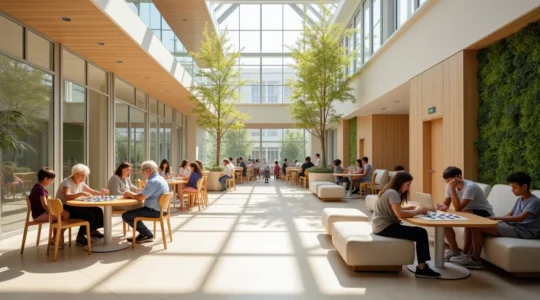
Why Community Centers Are Making a Comeback in Digital-First Neighborhoods?
Far from being obsolete, the community center is emerging as the most critical piece of social infrastructure for the health of our digital-first cities. They are not just buildings, but “social gymnasiums” designed to foster interactions that online platforms cannot…
Read more
Why Relocating to Singapore or London Often Costs 30% More Than Planned?
The 30% budget overrun in executive relocations rarely stems from predictable expenses, but from hidden ‘cost multipliers’ where financial, familial, and professional pressures intersect and amplify each other. Unmanaged emotional distress directly translates into professional underperformance and jeopardizes the entire…
Read more