
Elite focus isn’t about choosing between nootropics and meditation; it’s about mastering the underlying systems of biological energy and cognitive load.
- Your “healthy” smoothie is likely causing an energy crash. Stabilize your blood sugar with fat and protein for sustained performance.
- Strategic rest (like the ‘caffeine nap’) and environmental design are more effective for managing cognitive resources than simply pushing through with more stimulants.
Recommendation: Build a personalized system that integrates environmental design, biological rhythms, and tactical cognitive enhancers for sustainable, long-term high performance.
On the trading floor or in the final hours of closing a billion-dollar deal, focus isn’t just a virtue; it’s the currency of success. For professionals in high-stakes environments like investment banking and corporate law, a 12-hour shift is the baseline, and maintaining mental clarity is non-negotiable. The common advice is a familiar cocktail of more coffee, generic “brain foods,” and the vague suggestion to “minimize distractions.” When those fail, many turn to a binary choice: the biochemical boost of nootropics or the mindful discipline of meditation. But this presents a false dichotomy.
The search for a single magic bullet—be it a pill or a mantra—overlooks the fundamental truth of cognitive performance. Sustained focus is not an act of willpower; it’s the output of a well-managed system. The real challenge isn’t choosing between a supplement and a practice, but understanding how to orchestrate your internal biology and external environment to work for you, not against you. The constant battle against distraction, the afternoon energy slumps, and the creeping fear of burnout are not signs of personal failure, but symptoms of a broken system.
This guide moves beyond the simplistic “Nootropics vs. Meditation” debate. We will deconstruct the core pillars of elite cognitive endurance, treating focus as an integrated system. You’ll learn not just what to do, but why it works, from managing your biological energy cycles at a metabolic level to structuring your environment for deep work. This is the playbook for building unshakable, long-term cognitive resilience, not just surviving the next deadline, but mastering your mental state for the long haul.
To navigate this system effectively, we will explore the critical components that dictate your ability to perform under pressure. This summary outlines the key areas we will dissect to build your personal focus protocol.
Summary: The Playbook for Sustained Cognitive Performance
- Why Your “Healthy” Smoothie Might Be Causing Your Afternoon Crash?
- The Desk Setup Flaw That Interrupts Focus Every 15 Minutes
- Power Nap vs Caffeine: Which Restores Alertness Without Jitters?
- Memory Lapse or Burnout: How to Tell the Difference in Your 40s?
- Dual N-Back: Does Brain Training Software Actually Increase IQ?
- When to Schedule Deep Work: The Ultradian Rhythm Hack
- Micro-Learning vs Deep Dives: How to Upskill with Only 20 Minutes a Day?
- The “Soft Skill” Missing from 80% of Technical Manager Resumes
Why Your “Healthy” Smoothie Might Be Causing Your Afternoon Crash?
The 8 a.m. fruit smoothie feels like a virtuous choice, a quick injection of “brain food” to start the day. The reality is that most smoothies are metabolic time bombs. By blending high-glycemic fruits like bananas and mangoes, you pulverize the fiber that would normally slow down sugar absorption. The result is a rapid spike in blood glucose, followed by a significant insulin surge and the inevitable energy crash precisely when you need to be sharpest for the afternoon. This isn’t sustainable fuel; it’s a short-term loan with high interest.
Sustaining energy is about managing your biological energy cycles, not just consuming calories. The key is blood sugar stability. A breakfast or lunch that causes a sharp glucose peak will invariably lead to a trough in focus and alertness. To convert your smoothie from a liability into a performance asset, you must re-engineer it to slow down glucose absorption and provide lasting fuel. This means fundamentally shifting its macronutrient profile.
Instead of a fruit-heavy blend, rebalance it with these principles:
- Add Healthy Fats: Incorporate sources like half an avocado or a tablespoon of MCT oil. Fats do not trigger an insulin response and help stabilize blood sugar for hours.
- Prioritize Protein: A scoop of high-quality protein powder (20-30g) is non-negotiable. Protein slows gastric emptying, further blunting the glucose spike.
- Choose Low-Glycemic Fruits: Swap out mangoes and bananas for berries, which are high in fiber and have a much lower impact on blood sugar.
- Boost Fiber Content: Add a tablespoon of chia seeds, flax seeds, or psyllium husk to replicate the fiber lost in blending and promote sustained energy release.
Finally, the timing is critical. Never drink a smoothie on an empty stomach. Consume it alongside or after solid foods to ensure it’s part of a metabolically stable meal. This strategic approach to nutrition is the first line of defense in maintaining cognitive endurance throughout a demanding day.
The Desk Setup Flaw That Interrupts Focus Every 15 Minutes
You can have the most stable blood sugar in the world, but it won’t matter if your environment is engineered for distraction. The modern professional workspace, with its multiple monitors, constant email alerts, and Slack notifications, is a primary driver of fractured attention. It’s not a lack of willpower; it’s a problem of cognitive load management. Every notification, no matter how brief, is a “context switch” that depletes finite mental resources. In fact, research on workplace focus reveals that employees spend an average of just 11 minutes on a task before being interrupted.
The flaw is believing that more screens and more information streams equal more productivity. The opposite is true. A multi-monitor setup often becomes a multi-distraction setup, creating an environment where deep work is impossible. True productivity requires creating a sanctuary for focus, and that starts with your digital and physical desk.
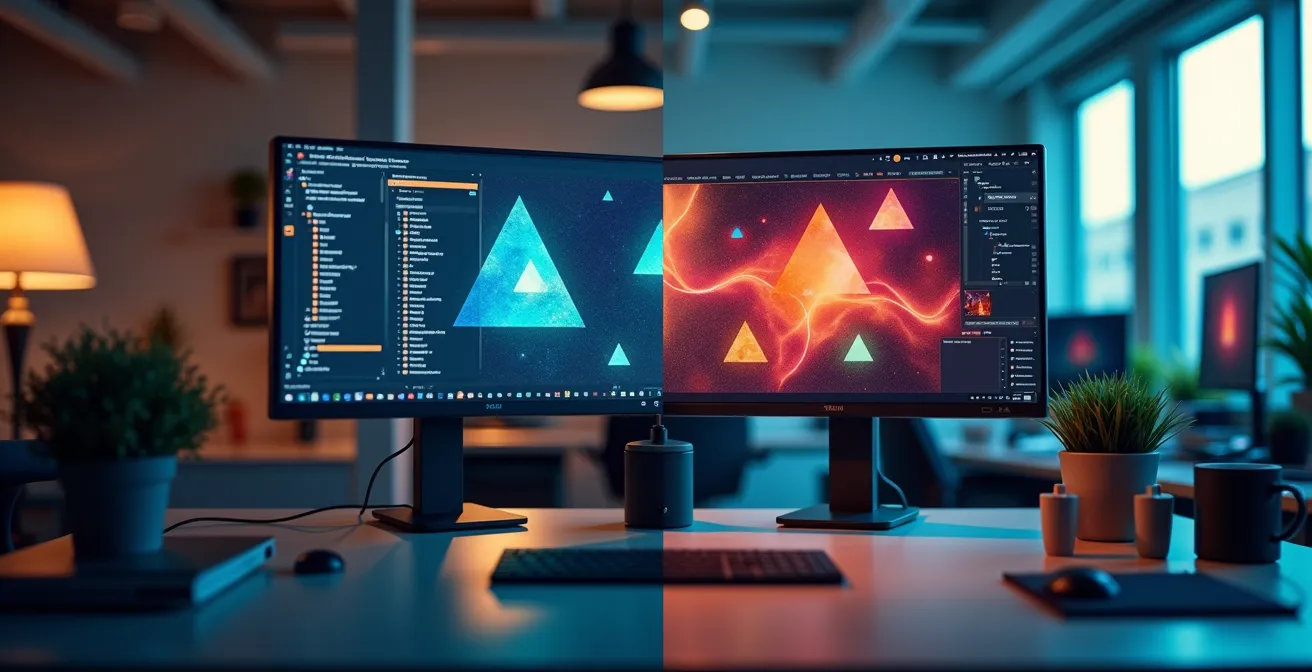
As the image above illustrates, there’s a stark contrast between a setup that invites chaos and one that commands focus. The solution is to ruthlessly eliminate decision fatigue and involuntary context switching. This means designing a single-task environment where your attention is directed by intention, not by interruption.
Case Study: David Tomen’s Integrated Focus System
David Tomen, the founder of NootropicsExpert.com, is a prime example of this integrated approach. After struggling with severe ADHD and the limitations of pharmaceuticals like Ritalin, he realized that supplementation was only part of the equation. A core component of his recovery and subsequent success was a radical optimization of his environment. He implemented a strict policy of turning off all notifications during his deep work blocks and made his daily one-hour meditation practice non-negotiable. By combining this environmental control with a strategic nootropic stack, he was able to overcome his cognitive challenges and build a thriving business, demonstrating that true focus comes from a holistic system, not a single solution.
Power Nap vs Caffeine: Which Restores Alertness Without Jitters?
I begin every day with a 1-hour meditation. We meditate for many of the same reasons we use nootropics – to support attention, concentration, anxiety disorders, learning and memory.
– David Tomen, Nootropics Expert – Best Nootropics to Enhance Meditation
When the 3 p.m. slump hits, the default move is another cup of coffee. Caffeine is a powerful tactical tool for boosting alertness, but it’s a blunt instrument. For many, it comes with jitters, anxiety, and a disrupted sleep cycle, leading to a vicious cycle of poor rest and increased caffeine dependency. High-performers need more refined tools for cognitive resilience. The choice isn’t just about getting a boost; it’s about the quality of that boost and its downstream consequences. The two most effective alternatives to simply adding more caffeine are the power nap and the “caffeine nap.”
A power nap works by clearing adenosine, a neurotransmitter that builds up in the brain and causes sleep pressure. A short nap (20 minutes) effectively resets this system, restoring alertness without the side effects of stimulants. The “caffeine nap” is a more advanced technique: you consume 200mg of caffeine and immediately take a 20-minute nap. Since caffeine takes about 20 minutes to take effect, you wake up just as the stimulant kicks in, benefiting from both the adenosine clearance of the nap and the alertness-promoting effects of the caffeine.
Choosing the right method depends on your goal, timing, and biology, as this breakdown shows from a comparative analysis of alertness methods.
| Method | Onset Time | Duration | Benefits | Drawbacks |
|---|---|---|---|---|
| 20-min Power Nap | Immediate | 1-3 hours | Clears adenosine, no tolerance buildup, improves memory consolidation | Grogginess if exceeding 30 min, workplace stigma in US/UK |
| 200mg Caffeine | 20-30 min | 4-6 hours | Quick alertness boost, socially accepted, readily available | Jitters, tolerance buildup, sleep disruption for slow metabolizers |
| Caffeine Nap | 20 min | 3-4 hours | Synergistic effect – adenosine clearing plus caffeine boost | Requires precise timing, not suitable for late afternoon |
While a nap might seem like a luxury, viewing it as a strategic tool for neurological maintenance is a hallmark of elite performers. It is a deliberate intervention to sustain performance, far more sophisticated than simply pouring another coffee.
Memory Lapse or Burnout: How to Tell the Difference in Your 40s?
For seasoned professionals in their 40s, a forgotten name or a misplaced file can trigger a wave of anxiety. Is this a normal “senior moment,” the first sign of age-related cognitive decline, or a symptom of something else entirely—burnout? Differentiating is critical because the intervention strategies are completely different. A simple memory lapse is a neutral cognitive error. Burnout-related memory issues, however, are accompanied by a distinct emotional signature: cynicism, emotional detachment, and a loss of purpose in your work. Your brain isn’t just failing to retrieve data; it’s actively disengaging.
Burnout is a state of chronic stress that exhausts your nervous system and depletes the neurotransmitters required for memory encoding and retrieval, like dopamine and acetylcholine. It’s not that the memory isn’t there; you lack the neurochemical resources to access it. This is a state of systemic depletion, not isolated cognitive failure. For women in this age bracket, the hormonal fluctuations of perimenopause can further complicate the picture, mimicking symptoms of both burnout and cognitive fog, creating a confusing diagnostic challenge.
While tactical nootropics like Phosphatidylserine can support cell membrane health, the strategic, long-term defense against both burnout and age-related decline is building cognitive resilience. This is where practices like meditation become a strategic imperative, not a wellness trend. Meditation has been shown to physically alter the brain for the better. For instance, Emory University research demonstrates that long-term Zen meditation practitioners showed no significant reduction in gray matter volume compared to the expected decline seen in control groups. It is an investment in your brain’s long-term structural integrity, acting as a buffer against the corrosive effects of chronic stress.
Dual N-Back: Does Brain Training Software Actually Increase IQ?
The promise of “brain training” software is seductive: play a simple game for 15 minutes a day and increase your fluid intelligence or IQ. One of the most-cited examples is Dual N-Back, a game that challenges your working memory. The evidence shows that playing Dual N-Back makes you very good at… playing Dual N-Back. This is known as “near transfer”—improvement on the specific task being trained. However, the ultimate goal for a professional is “far transfer”: does getting good at this game make you better at complex, real-world tasks like financial modeling, interpreting legal contracts, or strategic decision-making?
The scientific consensus on far transfer from brain training games is weak at best. The skills developed in a highly structured, repetitive game do not reliably translate to the dynamic, multi-faceted problems encountered in a high-stakes career. Relying on brain training apps for a cognitive edge is like an elite athlete preparing for a championship by only doing thumb exercises. It strengthens a single, isolated muscle while ignoring the integrated system required for peak performance.

The pursuit of a higher IQ score through a game misses the point. Elite cognitive performance isn’t about a single number; it’s about the robust and flexible application of multiple cognitive functions—working memory, long-term memory, processing speed, and executive function—in a complex environment. Instead of pouring time into isolated exercises with questionable ROI, your focus should be on activities with proven, systemic benefits, such as learning a new complex skill (like a musical instrument or language), engaging in regular physical exercise, and optimizing your sleep and nutrition. These activities build a more resilient and integrated cognitive system, which is the true foundation of intelligence in the real world.
When to Schedule Deep Work: The Ultradian Rhythm Hack
Most professionals structure their day around the clock and their meeting schedule, ignoring their own biology. The most productive individuals, however, schedule their work around their energy. Your brain operates on ultradian rhythms—90- to 120-minute cycles of high-frequency brain activity followed by a 15- to 20-minute period of low-frequency activity. During the peak of the cycle, you are primed for intense, focused work. During the trough, your brain needs to rest, consolidate information, and clear out metabolic waste. Pushing through this trough with caffeine or sheer willpower leads to diminished returns and eventual burnout.
The hack is to stop fighting your biology and start working with it. Identify your personal ultradian rhythms by paying attention to your focus levels throughout the day. You’ll likely notice natural peaks and valleys. Schedule your most cognitively demanding tasks—your “deep work”—during your 90-minute peaks. Then, honor the 20-minute trough with a deliberate break. This doesn’t mean scrolling through social media, which further taxes your brain. It means a real rest: a short walk, some light stretching, or simply looking out a window.
This approach requires proactively protecting your time, which can be a challenge in a collaborative, always-on work culture. However, the productivity gains from working in sync with your brain’s natural rhythm are immense. For those seeking an extra edge, certain nootropics can enhance these cycles. For example, research on L-theanine shows that it induces alpha brainwave activity, a state of “wakeful relaxation” similar to meditation, making it an excellent tool for enhancing the rest phase of your ultradian cycle or for entering a state of calm focus during the peak phase.
Action Plan: Protecting Your Ultradian Rhythms in a High-Stakes Environment
- Time-Block Your Calendar: Proactively block 90-minute “Focus Time” slots in your shared calendar and mark yourself as “Busy.” This creates a clear signal to colleagues.
- Use Status Messages Strategically: Set your Slack or Teams status to “Deep Work” or “Focus Mode,” including an expected time of return (e.g., “Back online at 2:30 PM”).
- Leverage Micro-Breaks: In demanding cultures like the “996” schedule, use your lunch break for a true 25-minute Pomodoro session followed by a 5-minute non-digital rest. Noise-cancelling headphones are essential.
- Schedule by Peak Hours: Identify your personal peak performance window (typically 2-4 hours after waking) and fiercely protect it for your most critical cognitive tasks.
- Create Deep Work Rituals: Signal the start of a focus block to your brain with a consistent ritual, such as a specific playlist, putting your phone in another room, or a two-minute breathing exercise.
Micro-Learning vs Deep Dives: How to Upskill with Only 20 Minutes a Day?
In fields like finance and tech, knowledge has a short half-life. The pressure to constantly upskill is immense, yet finding multi-hour blocks for “deep dive” learning is a fantasy for most busy professionals. This is where a strategic approach to learning becomes critical. The choice isn’t between “micro-learning” (short, 5-20 minute sessions) and “deep dives” (long, 2-4 hour blocks); it’s about using the right tool for the right job.
Micro-learning is ideal for rapidly changing skills: learning a new feature in a software framework, staying current on market news, or understanding a new regulatory update. Its strength is in high-frequency, low-duration engagement, which is excellent for retention of specific facts. Deep dives, on the other hand, are essential for foundational skills with a long shelf life, such as statistics, core programming principles, or fundamental legal theory. These require uninterrupted blocks of time to build a solid mental model.
The most effective strategy is the “Scaffolding Method,” which combines both. Use daily micro-learning sessions to build familiarity and introduce new concepts, then use a longer weekend session to connect these concepts in a deep dive, building a comprehensive understanding. This approach can be supported by nootropics, as shown in this analysis of learning strategies.
| Learning Type | Best For | Time Required | Nootropic Support | Retention Rate |
|---|---|---|---|---|
| Micro-Learning | Rapidly changing skills (new frameworks, current events) | 5-20 min daily | L-Theanine + American Ginseng for quick focus | 70% for specific facts |
| Deep Dives | Foundational skills (statistics, core programming) | 2-4 hour blocks weekly | Rhodiola + Citicoline for sustained concentration | 85% for complex concepts |
| Scaffolding Method | Building comprehensive expertise | 20 min daily + weekend sessions | Bacopa Monnieri for memory consolidation | 90% with spaced repetition |
By matching your learning method to the type of skill you’re acquiring, you can make significant progress with as little as 20-30 minutes per day, turning a perceived lack of time from an obstacle into a strategic constraint.
Key takeaways
- Sustained focus is a product of a managed biological system; prioritize stabilizing your blood sugar and honoring your natural rest-activity cycles.
- Your environment dictates your focus. Proactively design a low-distraction workspace and protect your attention as your most valuable asset.
- Stop the “vs.” debate. Use meditation and strategic rest as the foundation for long-term cognitive resilience, and employ nootropics as tactical tools for acute performance needs.
The “Soft Skill” Missing from 80% of Technical Manager Resumes
In technical and quantitative fields, résumés are filled with hard skills: programming languages, financial modeling certifications, legal specializations. Yet, the skill that often separates a good manager from a great leader is one that rarely appears on a CV: cognitive empathy. This isn’t about emotional hand-holding; it’s the ability to understand and manage the cognitive load and energy patterns of your team members as a strategic resource. A manager with cognitive empathy doesn’t just assign tasks; they orchestrate the team’s collective mental energy for peak performance.
A leader with this skill notices when a star analyst’s code quality dips, recognizing it not as laziness, but as a potential indicator of cognitive overload. They schedule brainstorming meetings in the late morning, when collective energy is high, not at 4:30 p.m. on a Friday. They act as an “attention protector” for their team, deflecting low-value meetings and batching communications to allow for uninterrupted blocks of deep work. This approach has a tangible impact on the bottom line. Studies have found that companies that actively support employee wellness with sustainable energy strategies have been shown to outperform their competitors by as much as 10%.
Developing cognitive empathy requires a shift from managing projects to managing people’s capacity to perform. It involves actively observing and adapting to the human element of productivity. Here are concrete ways to build this skill:
- Map Energy Patterns: Through observation and one-on-one discussions, identify the peak performance hours of each team member.
- Structure Schedules Intelligently: Organize meetings around the team’s collective energy, not just calendar availability.
- Model Sustainable Performance: Take real breaks, log off on time, and openly discuss the importance of rest. This gives your team permission to do the same.
- Recognize Cognitive Load Indicators: Pay attention to signals like decreased output quality, longer review cycles, or delays in communication as signs of potential burnout.
In an era where top talent is scarce, the ability to create an environment that fosters sustainable high performance is the ultimate competitive advantage. Cognitive empathy is the key to unlocking it.
Frequently Asked Questions on Nootropics, Focus, and Burnout
What emotional symptoms differentiate burnout from simple memory lapses?
Burnout-related memory issues come with cynicism, emotional detachment, and loss of interest. Pure memory lapses are emotionally neutral cognitive errors without accompanying mood changes.
How can perimenopause complicate the diagnosis in women over 40?
Hormonal fluctuations during perimenopause can mimic both burnout and cognitive decline symptoms, creating a confusing trifecta that requires careful evaluation of timing and cyclical patterns.
What nootropics specifically help with age-related cognitive concerns?
Lion’s Mane Mushroom supports nerve growth factor production, Phosphatidylserine maintains cell membrane health, and Rhodiola Rosea helps manage stress-related cognitive decline.
Stop searching for a single magic bullet for focus. The path to sustained, elite cognitive performance lies in building and managing an integrated system. Start today by auditing your biological energy cycles, redesigning your environment for deep work, and treating rest as a non-negotiable strategic tool.