
Contrary to decades of misinformation, MSG isn’t a mysterious or harmful additive but a pure form of umami, the ‘fifth taste.’ This article reveals that understanding umami is the key to unlocking the flavor control panel—involving salt, fat, acid, and heat—that professional chefs use to create deeply satisfying dishes and solve everyday cooking problems.
Have you ever meticulously followed a recipe, only for the final dish to lack the profound, savory depth you remember from your favorite restaurant? For many Western cooks, this gap in flavor is a common frustration. Often, the instinct is to just add more salt, but that rarely achieves the desired complexity. For decades, a cloud of suspicion has hung over one particular ingredient whispered to be the secret: monosodium glutamate, or MSG. Blamed for everything from headaches to numbness, the so-called “Chinese Restaurant Syndrome” has made MSG a culinary pariah in many kitchens.
This widespread fear has led home cooks to avoid it, and in doing so, they’ve inadvertently locked themselves out of understanding a fundamental pillar of taste. The usual advice—to seek out natural sources of umami in things like tomatoes or mushrooms—is a good start, but it only scratches the surface. It tells you ‘what’ to use, but not ‘why’ it works, or ‘how’ to control it.
But what if the key to restaurant-quality flavor wasn’t about avoiding an ingredient, but about fundamentally understanding the science of taste perception itself? The truth is that MSG isn’t a cheat code; it’s a direct line to umami, the savory “fifth taste” that acts as the foundation for complex flavor. By demystifying MSG, we can unlock the entire flavor control panel that chefs manipulate every day. This article will guide you through the core principles of flavor science, using common kitchen challenges to illustrate how umami, acid, fat, and heat work in harmony. You’ll learn not just to debunk a myth, but to think like a chef and take control of your cooking.
To help you navigate this exploration of flavor science, we have broken down the core concepts into distinct, practical sections. From understanding the source of “meaty” flavors to balancing a salty soup or ensuring street food is safe to eat, each part builds on the last to give you a complete toolkit.
Summary: The Science of Flavor: Debunking MSG Myths to Master Your Cooking
- Parmesan and Mushrooms: How to Create “Meaty” Flavor in Vegan Dishes?
- The Potato Trick: Does It Actually Fix a Salty Soup?
- Kale is Too Bitter: The Fat and Acid Combo That Tames It
- Scoville Units Explained: Why Jalapeños Vary So Much in Heat?
- Bloom or Toss: When Do Dried Spices Lose All Their Flavor?
- Acid, Fat, Heat: The Ratios That Make “Weird” Combinations Work?
- Why Eating Raw Salads in Winter Damages Your “Qi”
- Street Food Safety: How to Eat Locally in Bangkok Without Getting Sick?
Parmesan and Mushrooms: How to Create “Meaty” Flavor in Vegan Dishes?
The secret to creating a “meaty” or deeply savory flavor without any meat lies in one powerful concept: umami. Often described as the fifth basic taste alongside sweet, sour, salty, and bitter, umami is the rich, mouth-watering sensation you get from a perfectly seared steak, a slow-simmered broth, or aged Parmesan cheese. This taste is triggered by glutamates, a type of amino acid found naturally in many foods. For vegan cooking, mushrooms, especially dried shiitakes, are a powerhouse of umami, as are ripe tomatoes and fermented products like soy sauce and nutritional yeast.
This brings us to the most misunderstood source of umami: MSG. Monosodium glutamate is simply the sodium salt of glutamic acid. When dissolved, it separates into sodium and free glutamate—the exact same glutamate molecule found in mushrooms and cheese. As Richard Amasino, a Professor of Biochemistry at the University of Wisconsin-Madison, states, the science is unequivocal:
The short answer is that there is no difference: glutamate is glutamate is glutamate
– Richard Amasino, Professor of Biochemistry, University of Wisconsin-Madison
Understanding this equivalence is liberating. Whether you are adding Parmesan to pasta or a pinch of MSG to a mushroom broth, you are leveraging the same scientific principle to build flavor. In fact, using umami-rich ingredients can enhance flavor so effectively that you can use less salt. Indeed, research has shown that MSG can reduce sodium content by 30-40% while maintaining or even improving the perceived deliciousness of a dish. This makes umami a crucial tool not just for flavor, but for healthier cooking.
By mastering umami, you are no longer just mimicking meat; you are building a sophisticated sensory architecture from the ground up, creating dishes that are profoundly satisfying in their own right.
The Potato Trick: Does It Actually Fix a Salty Soup?
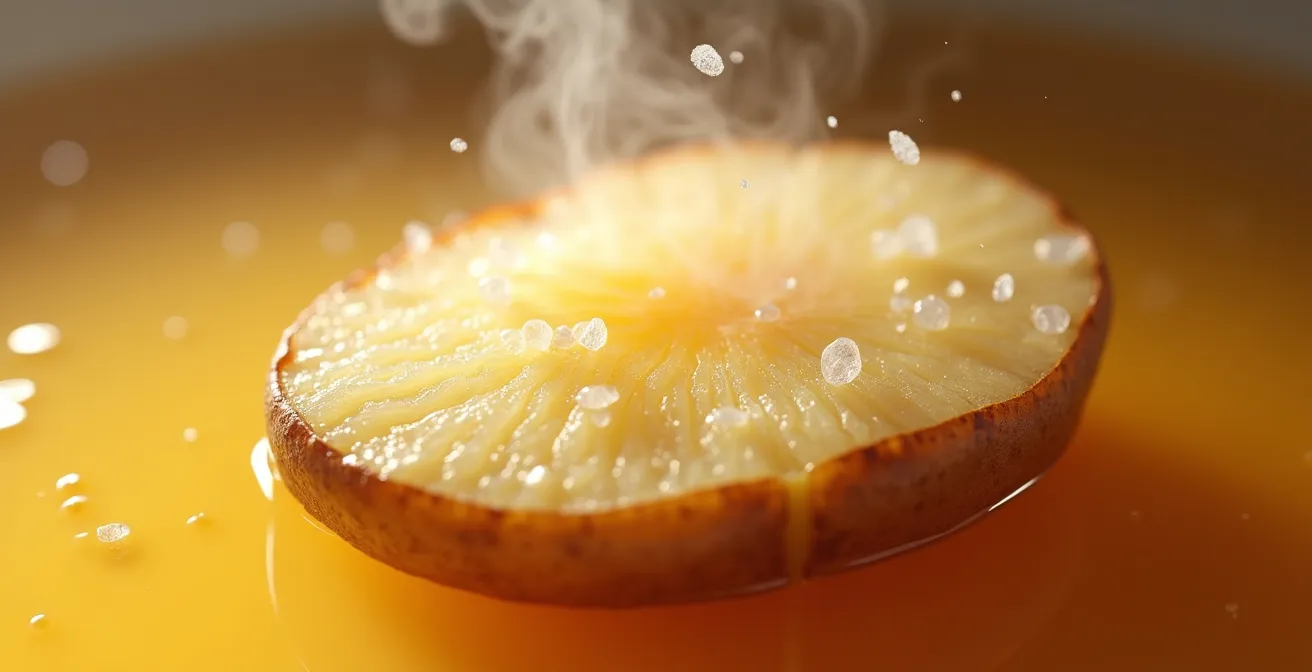
It’s a piece of kitchen folklore passed down through generations: if your soup is too salty, just drop in a raw, peeled potato to absorb the excess. It sounds plausible—potatoes are starchy and absorbent, after all. But from a food science perspective, this is a myth. A potato in soup will absorb the salty liquid, but it absorbs the salt and water in the same proportions as the broth itself. When you remove the potato, you remove a small amount of salty liquid, but you don’t selectively pull out the salt. The salt concentration of the remaining soup is unchanged.
So, what do professional chefs actually do? They don’t try to remove the salt; they balance it. This is a perfect example of using the “flavor control panel” to your advantage. Excessive saltiness can be counteracted by introducing competing tastes that distract your palate. The most effective tools for this are acid and sweetness. Adding a splash of lemon juice or vinegar (acid) can cut through the saltiness and brighten the overall flavor. A small pinch of sugar or a drop of maple syrup (sweetness) can also help mask the salt by creating a more complex flavor profile.
The most effective strategy is to simply dilute the soup by adding more unsalted liquid, like water or broth. This physically lowers the salt concentration. However, when dilution would make the soup too thin, the acid-and-sweetness balancing act is the professional’s go-to technique. It’s a form of “taste receptor hacking” that makes the saltiness less prominent without watering down the dish’s core flavors.
Instead of relying on kitchen myths, understanding how tastes interact allows you to correct mistakes with precision and confidence, a hallmark of advanced cooking.
Kale is Too Bitter: The Fat and Acid Combo That Tames It
Kale, along with other bitter greens like radicchio and endive, owes its sharp flavor to compounds designed by nature to deter pests. For the human palate, this bitterness can be overwhelming. The common advice is to “massage” the kale, which helps to physically break down its tough cellulose structure, making it more tender. But to truly conquer the bitterness, you need to turn to the dynamic duo of the flavor control panel: fat and acid.
The science behind this is fascinating. Bitterness is perceived when specific compounds bind to taste receptors on your tongue. Fat molecules work by physically coating your tongue and these receptors. This creates a barrier that prevents many of the bitter compounds from making contact, effectively muting their signal to your brain. This is why a rich, fatty dressing can make a bitter salad suddenly delicious. At the same time, acid (like from lemon juice or vinegar) provides a competing sour taste that distracts from the bitterness and “brightens” the overall flavor profile.
Different culinary traditions around the world have intuitively mastered this pairing. By observing these, you can find inspiration for taming any bitter green:
- USA: A classic American kale salad often features a creamy, fatty dressing made with avocado or tahini, balanced with the sharp acidity of lemon juice.
- UK: In “Bubble and Squeak,” leftover greens are often fried in rich bacon fat, with a splash of malt vinegar added at the end for a tangy counterpoint.
- Canada: A popular approach involves a maple-dijon vinaigrette, where the sweetness from the maple syrup and the fat from the oil base work together to temper the kale’s bite.
- China: Bitter melon, a notoriously potent vegetable, is frequently stir-fried with fatty pork and balanced with the complex acidity of Chinese black vinegar.
By understanding this principle, you can confidently incorporate healthy bitter greens into your diet, transforming them from a challenge to a delight.
Scoville Units Explained: Why Jalapeños Vary So Much in Heat?
Anyone who enjoys spicy food has experienced it: one jalapeño is pleasantly warm, while the next one from the same batch sets your mouth on fire. This dramatic inconsistency isn’t your imagination; it’s a result of fluctuating levels of a compound called capsaicin, the chemical responsible for the “heat” in chili peppers. The concentration of capsaicin is measured on the Scoville Heat Unit (SHU) scale. A bell pepper has 0 SHU, a jalapeño can range from 2,500 to 8,000 SHU, and a habanero can top 350,000 SHU.
The reason for this variation, even within the same plant, comes down to environmental stress. Research shows that capsaicin is a defense mechanism for the pepper plant. When a plant experiences stress—such as from drought, extreme temperature swings, or poor soil conditions—it ramps up its production of capsaicin to protect itself. Therefore, a pepper that has had a tougher life will be spicier. Most of the capsaicin is concentrated in the white pith and seeds, which is why removing them is an effective way to moderate a chili’s heat.
Interestingly, capsaicin doesn’t trigger our taste receptors. Instead, it activates pain receptors, specifically the trigeminal nerve, which is responsible for sensations of temperature and texture. This is known as a chemesthetic sensation. As explained by Dr. Nirupa Chaudhari, a biophysiology researcher, this pain signal can have a surprising effect on flavor: “This ‘chemesthetic’ sensation can heighten the perception of other flavors like umami and salt.” This is why a little bit of heat can make a dish seem more savory and complex, adding another layer to the sensory architecture of a meal.
So, the next time you bite into an unexpectedly fiery jalapeño, you can appreciate it as a sign of the pepper’s resilient past and its powerful ability to amplify the flavors around it.
Bloom or Toss: When Do Dried Spices Lose All Their Flavor?
That jar of paprika from three years ago might still look red, but its flavor is likely a ghost of its former self. The vibrant taste and aroma of spices come from their volatile essential oils. As the name suggests, these oils are “volatile,” meaning they easily evaporate when exposed to their three main enemies: air, light, and heat. Over time, this degradation causes spices to lose their potency, leaving you with little more than colored dust.
The form of the spice makes a huge difference in its shelf life. Whole spices, like peppercorns, cumin seeds, or nutmeg, have a much smaller surface area exposed to the elements. Their essential oils are safely locked away inside. When you grind a spice, you dramatically increase its surface area, causing those precious oils to dissipate rapidly. For this reason, pre-ground spices lose their flavor much faster than their whole counterparts. As a general rule, whole spices can last for several years, while ground spices are best used within six months to a year.
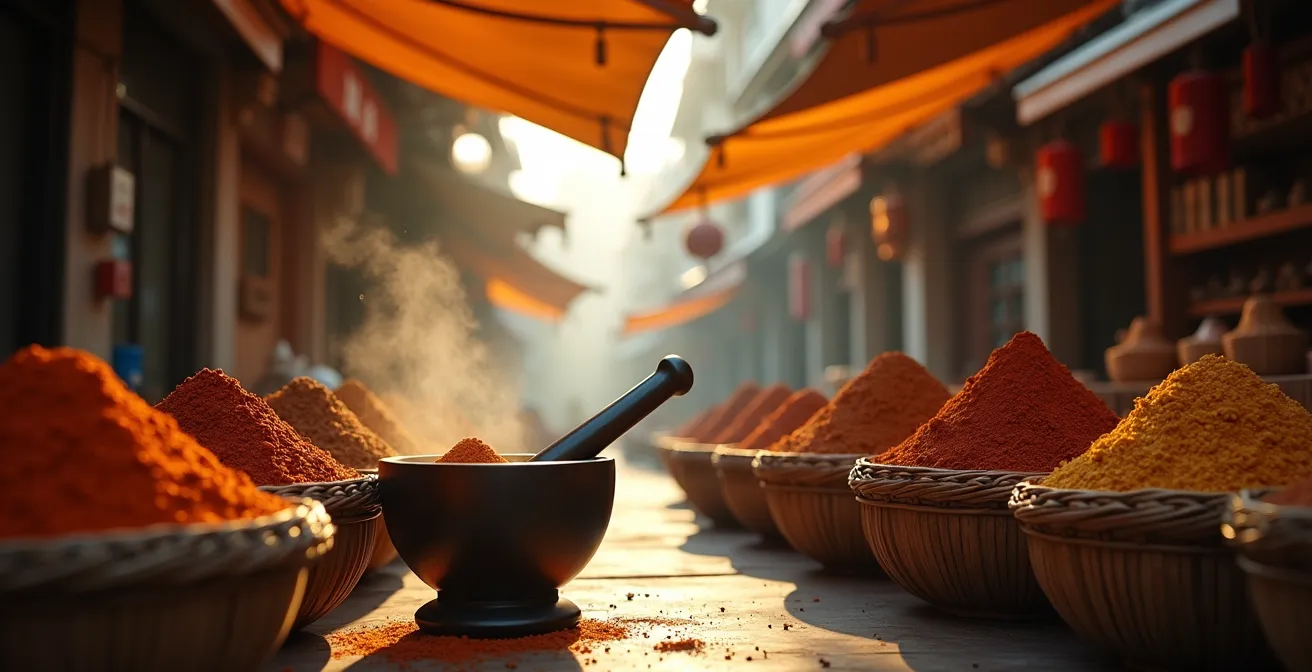
To get the most out of your spices, there are two key strategies. First, buy whole spices whenever possible and grind them yourself right before use. The difference in aroma and flavor is astounding. Second, for both whole and ground spices, practice proper storage: keep them in airtight containers in a cool, dark place, away from the heat of the stove. To check if a ground spice is still good, crush a little in your palm—if the aroma is faint or dusty, it’s time to toss it.
You can also “bloom” or toast spices to revive and intensify their flavor. Gently heating whole or ground spices in a dry pan or a little oil for a minute until they become fragrant helps to release their essential oils, making them more impactful in your final dish. This is a crucial step in many cuisines, from Indian curries to Mexican moles.
Treating your spices with care is an easy step that pays huge dividends, ensuring every dish you make is as vibrant and aromatic as it can be.
Acid, Fat, Heat: The Ratios That Make “Weird” Combinations Work?
Have you ever wondered why a pickle on a rich cheddar cheese sandwich tastes so right, or why a squeeze of lime elevates a fatty taco? These “weird” combinations aren’t random; they are masterful applications of a universal flavor framework. While recipes vary endlessly across the globe, the underlying principles of balancing taste remain constant. The most successful dishes are not just a collection of ingredients, but a carefully constructed sensory architecture built on the five pillars of flavor: Salt, Fat, Acid, Heat, and the foundational fifth taste, Umami.
Each pillar plays a distinct role. Salt enhances existing flavors. Fat carries aromas and provides a rich mouthfeel. Acid cuts through richness and adds brightness. Heat (from spices) introduces an exciting chemesthetic sensation. And Umami provides a deep, savory foundation that makes a dish feel complete and satisfying. Adding umami has been shown to increase the overall palatability and enjoyment of food significantly. The magic happens when these pillars are in balance. A dish with too much fat feels heavy and greasy until acid is added to cut it. A dish that tastes flat can be brought to life with a pinch of salt or a boost of umami.
This framework is the secret code behind global cuisine. As a comparative analysis from food experts shows, wildly different dishes often share the same balanced structure. This five-pillar framework, as detailed in an analysis of global flavor pairings, reveals a universal logic.
| Country/Cuisine | Dish Example | Salt | Fat | Acid | Heat | Umami |
|---|---|---|---|---|---|---|
| USA | Kansas City BBQ Sauce | Salt content | Oil base | Vinegar | Spices | Tomato paste |
| UK | Cheddar & Pickle Sandwich | Cheese salt | Cheese fat | Pickle vinegar | Mustard | Aged cheese |
| China | Fish-fragrant (鱼香) | Soy sauce | Cooking oil | Black vinegar | Chili | Chili bean paste |
Once you learn to think in terms of these five pillars instead of just following a recipe, you can troubleshoot your own cooking, create new dishes, and understand why certain flavors feel destined to be together.
Why Eating Raw Salads in Winter Damages Your “Qi”
In Traditional Chinese Medicine (TCM), the concept of “Qi” refers to the body’s vital life force or energy. According to this philosophy, foods have energetic properties—some are “cooling” (like raw vegetables and fruits) while others are “warming” (like ginger, cinnamon, and cooked foods). In winter, when the external environment is cold, TCM advises against consuming an excess of cooling foods like raw salads, as this is believed to deplete the body’s “Qi” and strain the digestive system, which needs to work harder to warm and process the food.
While the concept of Qi is metaphysical, this ancient wisdom aligns surprisingly well with modern nutritional science and the concept of digestive energetics. Digestion is a metabolically intensive process that requires energy. Cooked foods are, in a sense, “pre-digested.” The heat has already started to break down tough cell walls and complex molecules, making them easier for our bodies to process and absorb nutrients from. As one food science expert team from Nature notes, “Cooked foods not only are easier to digest but often have more bioavailable nutrients and more developed flavors through processes like caramelization and the Maillard reaction.”
In fact, nutritional science shows that cooked foods require 25-30% less digestive energy for our bodies to utilize compared to their raw counterparts. In the cold of winter, when the body is already expending energy to stay warm, conserving digestive energy can be beneficial. Eating warming, cooked foods like soups, stews, and roasted vegetables provides nourishment that is both easy to digest and comforting, aligning perfectly with the TCM goal of preserving Qi.
This doesn’t mean you should never eat a salad in winter, but it does suggest that listening to traditional advice to favor cooked, warming meals during colder months has a valid scientific basis. It’s a holistic approach that considers not just the nutrients in food, but also the energy required to obtain them.
Key Takeaways
- Umami is a fundamental taste that provides savory depth, and MSG is its purest, most direct form—scientifically identical to the glutamate in tomatoes and cheese.
- True flavor mastery comes not from single ingredients but from balancing the five pillars: Umami, Salt, Acid, Fat, and Heat.
- Understanding the science of taste—from how fat mutes bitterness to how capsaicin creates heat—empowers you to fix mistakes and enhance any dish like a professional.
Street Food Safety: How to Eat Locally in Bangkok Without Getting Sick?
Eating street food is one of the most exciting ways to experience a new culture, offering a direct taste of local life in places like Bangkok. However, the fear of getting sick can hold many travelers back. While there are no absolute guarantees, you can dramatically minimize your risk by learning to think like a local and using your senses as a powerful food safety tool. Instead of relying on guidebooks, look for the same cues that residents use to pick the best and safest vendors.
The key is to observe the entire operation. Pay attention to food handling, temperature, and customer turnover. Bacteria thrive in what food safety experts call the “danger zone.” According to food safety guidelines, the danger zone is between 4°C and 60°C (40°F and 140°F), a temperature range where bacteria can multiply rapidly. Food that is steaming hot or kept on ice is generally much safer than food that is sitting out at lukewarm temperatures. A busy stall with a long line of locals is your best friend—it indicates that the food is not only delicious but also has a high turnover rate, meaning ingredients are constantly being replenished and are likely fresh.
Beyond these observations, you can perform a quick sensory audit before you order. This checklist will help you evaluate a stall in seconds, using the same senses that guide experienced street food connoisseurs.
Action Plan: Your Sensory Checklist for Safe Street Food
- Smell: Assess the cooking oil’s aroma. Does it smell fresh and clean, or does it have a stale, rancid odor, which is a sign of repeated use and oxidation?
- Sight: Observe their food handling. Are raw ingredients, especially meats, kept separate from cooked items? Are they stored on ice to stay out of the temperature danger zone?
- Sound: Listen for the sizzle. The sound of high-heat cooking is a good indicator that food is being cooked to a temperature that kills harmful bacteria.
- Temperature: Check if the food is cooked to order. Freshly cooked, piping hot food is always a safer bet than food that has been sitting in a display case for an unknown amount of time.
- Turnover: Choose the busiest stalls. A long line of locals is the single best indicator of a stall’s quality, freshness, and safety.
Armed with this knowledge, you can move past the fear and embrace the vibrant, delicious world of street food, turning your trip into a truly authentic culinary adventure.