
Maximizing your rooftop harvest isn’t about choosing hydroponics or soil; it’s about selecting the system that best counters your roof’s specific environmental threats.
- Hydroponics offers superior control over pests and water, crucial for mitigating the unpredictable aerodynamic stress of high-rise environments.
- Soil-based gardens, while traditional, require meticulous structural integrity planning and may be more susceptible to urban contaminant absorption.
Recommendation: First, get a structural assessment of your roof’s load capacity, then choose your growing system as a strategic solution to its inherent limitations.
The dream of a sun-ripened tomato, picked fresh from a rooftop garden high above the city bustle, is a powerful one. For many urban gardeners, it represents a slice of self-sufficiency and a mental refuge. Yet, the reality is often a collection of wind-battered, struggling plants that defy conventional gardening wisdom. You’ve followed the advice: you provide ample water, you use good quality soil, but the yields remain disappointingly low, leaving you to question the entire endeavor.
The common solutions offered—more water, different fertilizer, better sunlight—treat the rooftop as if it were a placid, ground-level backyard. This is the fundamental mistake. A rooftop is a hostile micro-ecosystem, subject to unique pressures like intense wind, structural weight limits, and concentrated urban pollution. The real question is not simply “hydroponics or soil?” but rather, “which growing system provides the superior management toolkit to conquer the specific, interconnected challenges of a vertical city environment?”
This guide moves beyond the simplistic debate. We will dissect the core challenges of rooftop cultivation, from structural engineering to pest management, and analyze how each growing method performs under pressure. By reframing the choice as a strategic decision in ecosystem management, you will gain the horticultural expertise to build a truly resilient and productive urban oasis.
To navigate this complex environment, we will explore the critical factors that determine success. This structured approach will help you understand the foundational constraints and opportunities of your unique rooftop space, empowering you to make an informed, experimental choice that yields results.
Summary : Hydroponics or Soil: Which Yields More Tomatoes on a Windy Rooftop?
- The Weight Calculation That Keeps Your Roof Garden from Collapsing
- Why Your Rooftop Plants Are Dying Despite Enough Water?
- Leafy Greens vs Root Veg: Which Absorbs Less Traffic Pollution?
- Who Gets the Strawberries: How to Share Harvests in Communal Gardens?
- When to Wrap Pots: The Frost Date Mistake That Cracks Ceramic
- Foxes and Coyotes: How to Design Green Spaces That Don’t Invite Pests?
- Supermarket vs Specialty Store: Where to Buy Gochujang That Actually Tastes Good?
- The Weight Calculation That Keeps Your Roof Garden from Collapsing
The Weight Calculation That Keeps Your Roof Garden from Collapsing
Before a single seed is planted, the first and most critical experiment in rooftop gardening involves physics, not horticulture. The single greatest constraint of any elevated garden is structural integrity. A garden saturated with water after a heavy rainstorm can weigh exponentially more than it does when dry, exerting immense pressure on the structure below. Ignoring this “live load” capacity is not just a risk to your plants, but to the building itself. This challenge is being addressed at a massive scale globally; as an example of this trend, Shanghai planned to install 400,000 square meters of rooftop gardens in a single year, highlighting the critical need for proper engineering assessments.
The choice between soil and hydroponics begins here. Traditional soil is dense and heavy, especially when wet. A cubic foot of saturated garden soil can weigh over 100 pounds. In contrast, hydroponic systems, which use lightweight soilless media like perlite, coco coir, or just water, significantly reduce the base weight. This makes them a more viable option for roofs with limited load-bearing capacity, allowing for more extensive cultivation without requiring costly structural reinforcement. The key is to think in terms of “pounds per square foot” and to design your garden ecosystem around that immutable number.
Action Plan: Rooftop Garden Weight Audit
- Structural Consultation: Engage a structural engineer to determine your roof’s precise “live load” capacity, which accounts for temporary additions like snow and rainwater. This is your non-negotiable weight budget.
- Lightweight Media Selection: Inventory your growing media options. Prioritize soilless mixes (peat, coco coir, perlite) for container gardens or commit to a hydroponic system to drastically reduce weight.
- Container Optimization: Confront your planter choices. Use styrofoam blocks to fill the bottom third of planters taller than 24 inches to reduce soil volume. Opt for lightweight fiberglass or recycled plastic containers over heavy concrete or ceramic.
- Load Distribution Mapping: Create a layout that spreads weight across structural support beams and load-bearing walls rather than concentrating it in the center of the roof span. This prevents dangerous point loading.
- Integration Plan: Systematically replace heavy materials with lighter alternatives. Prioritize changing out the largest, heaviest pots first to achieve the biggest impact on your overall weight load.
Why Your Rooftop Plants Are Dying Despite Enough Water?
It’s a frustratingly common scenario for the rooftop gardener: the soil is moist, yet the tomato leaves are yellowed, crispy, and wilting. The culprit is often not a lack of water in the pot, but a phenomenon known as aerodynamic stress. Rooftops act as wind tunnels, and the constant barrage of moving air dramatically increases the rate of transpiration—the process where plants release water vapor from their leaves. The plant simply cannot draw water up from its roots fast enough to compensate for the moisture being stripped away by the wind, leading to desiccation and “windburn,” even in damp soil.
This is where hydroponic systems offer a significant experimental advantage. By delivering a nutrient-rich water solution directly to the root zone, they create a highly efficient hydration system. The roots are constantly bathed in moisture, allowing the plant to better cope with the high transpiration rates caused by wind. Indeed, research shows hydroponic gardens can use up to 90% less water than soil-based counterparts, not because the plants are less thirsty, but because virtually none of the water is lost to evaporation from the soil surface. It all goes directly to the plant, providing a crucial buffer against the relentless drying effect of the wind.
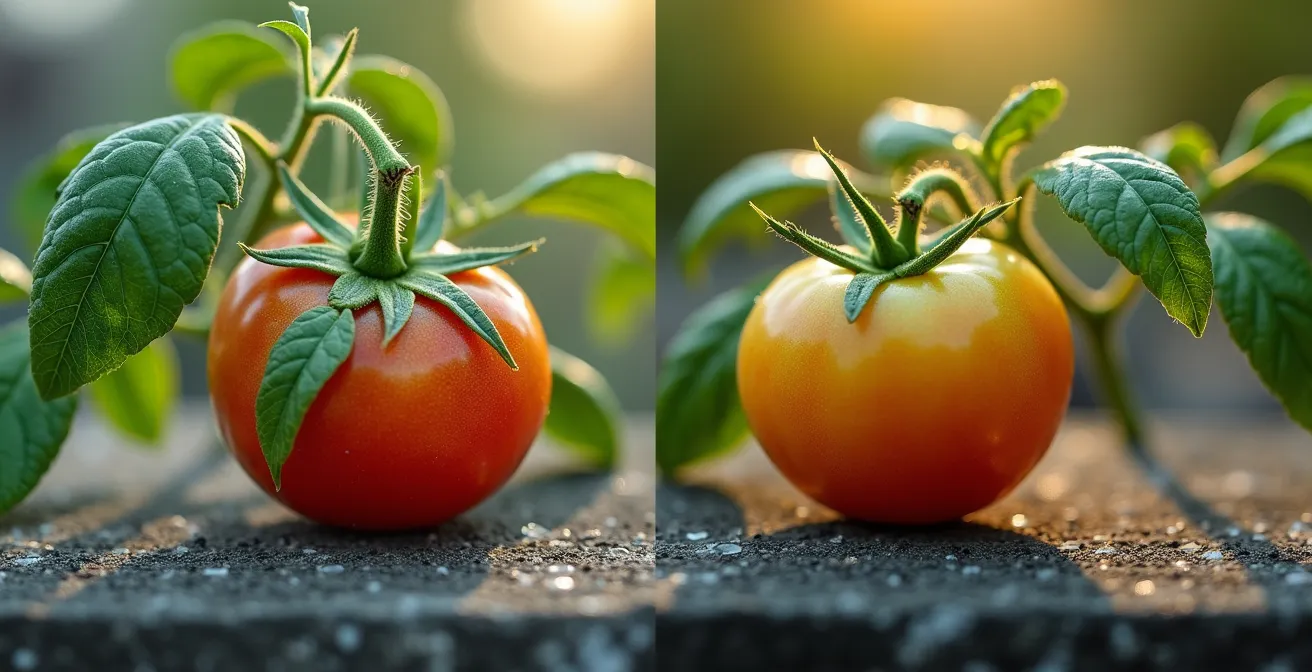
As you can see in the comparison, the effects of wind are distinct from simple underwatering. The leaves become brittle and show signs of physical damage, not just limpness. Managing your rooftop ecosystem means managing water with surgical precision, something hydroponics is inherently designed to do, making it a powerful tool for combating the invisible threat of aerodynamic stress.
Leafy Greens vs Root Veg: Which Absorbs Less Traffic Pollution?
Growing food in a city means contending with an invisible harvest: airborne pollutants. Heavy metals and particulate matter from traffic exhaust can settle on and be absorbed by plants, raising valid concerns about food safety. The physical form of the vegetable plays a major role in this process. Leafy greens like lettuce and kale, with their large, exposed surface areas, act like natural nets, capturing a higher amount of these airborne deposits. Root vegetables, such as carrots and radishes, are comparatively more protected, as the edible portion develops beneath the soil or growing medium, which acts as a contaminant buffer.
While soil can filter some pollutants, its composition is highly variable. Hydroponic systems, however, offer a more controlled environment. By eliminating soil, you eliminate a major variable for contaminant accumulation. As Brad Rowe, a horticulturalist at Michigan State University specializing in green roof technology, points out, hydroponic systems offer unique advantages on rooftops, including their lighter weight. This allows for more strategic placement of the garden, potentially elevating it or positioning it away from direct street-level exhaust. In a soilless system, the primary path for contamination is surface deposit on the leaves, which can be largely washed off before consumption. This gives the gardener a greater degree of control over the purity of their final product, making it a compelling experimental choice for the health-conscious urban farmer.
Who Gets the Strawberries: How to Share Harvests in Communal Gardens?
In a communal rooftop garden, the joy of a successful harvest can quickly be replaced by the challenge of equitable distribution. A traditional soil garden often produces in seasonal peaks—a sudden glut of tomatoes in August, a wave of zucchini in July. This “burst” harvest model can be difficult to share fairly and often leads to waste. The question of “who gets the first ripe strawberry?” becomes a genuine social dilemma. The solution lies in designing a system with predictable, continuous output, which fundamentally changes the distribution model from a competitive event to a manageable allocation.
This is where hydroponic systems, particularly vertical ones, excel in a communal setting. They are not as bound by seasonality and are engineered for a staggered, continuous harvest. A well-managed hydroponic tower can produce leafy greens or strawberries week after week, all year round. This transforms the sharing model. Instead of a chaotic “harvest day,” the community can implement a predictable weekly allocation system based on the system’s known output. This high degree of predictability makes the entire process more transparent and fair for everyone involved.
The following table, based on an analysis of different gardening methods, breaks down how the choice of growing system directly impacts the potential sharing model in a community garden.
| Growing Method | Harvest Pattern | Yield Predictability | Sharing Model |
|---|---|---|---|
| Hydroponics | Continuous, staggered | High – controlled environment | Weekly allocation system |
| Soil Gardens | Seasonal peaks | Variable – weather dependent | Harvest day events |
| Vertical Hydroponics | Year-round production | Very high – automated systems | Square footage rental |
| Container Soil | Concentrated bursts | Medium – portable options | Individual plot ownership |
When to Wrap Pots: The Frost Date Mistake That Cracks Ceramic
The transition from autumn to winter on a rooftop is more abrupt and severe than on the ground. One of the costliest mistakes an urban gardener can make is misjudging the first frost. In porous containers like ceramic and terracotta, the soil absorbs and retains water. When temperatures plummet, this trapped water freezes, expands, and exerts immense force, cracking and destroying expensive pots. Simply moving them indoors is often not an option due to weight and space constraints. Therefore, proactive insulation becomes a critical survival strategy for your container ecosystem.
You must begin monitoring temperatures closely once they consistently dip below 50°F (10°C), especially for cold-sensitive plants like tomatoes. The key is to protect the pots *before* the first hard frost. This involves wrapping them in insulating materials like horticultural fleece, old blankets, or even bubble wrap to protect the container itself. For soil-based pots, applying a thick, 3-4 inch layer of mulch (like straw or wood chips) helps insulate the roots. For hydroponic systems, the primary concern is the reservoir and pumps; these must be drained or protected from freezing to prevent irreversible damage. The exposed nature of the rooftop means you should act at least a week or two before the predicted first frost date for your area.
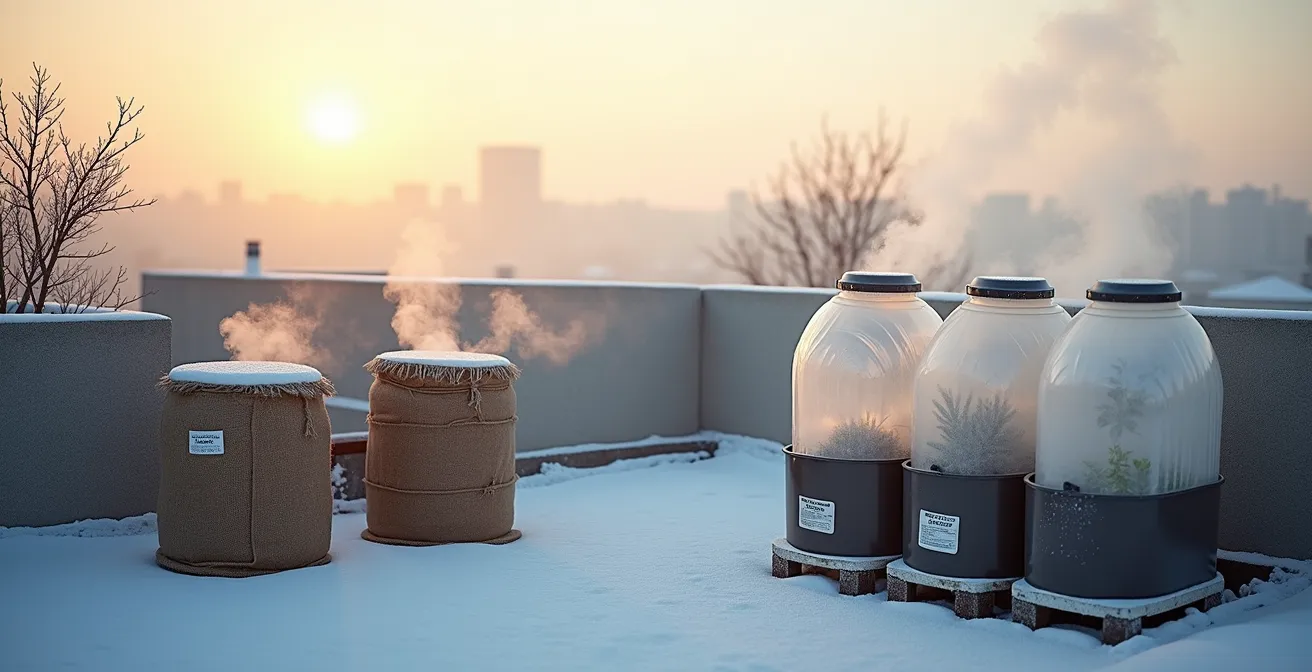
A winterized rooftop garden is a testament to foresight. It involves a multi-pronged approach: protecting the containers from cracking, insulating the roots from freezing, and safeguarding the mechanical components of any hydroponic setup. This preparation ensures your garden infrastructure survives to the next growing season.
- Monitor temperature daily when it drops below 50°F (10°C) as tomatoes are sensitive to cold.
- Wrap ceramic and clay pots with horticultural fleece or bubble wrap before the first hard frost.
- Drain hydroponic reservoirs if a hard freeze is expected to prevent pump damage.
- Move portable containers against building walls for added thermal protection from retained heat.
- Apply a 3-4 inch layer of mulch to the surface of soil containers for root insulation.
Foxes and Coyotes: How to Design Green Spaces That Don’t Invite Pests?
An often-overlooked aspect of urban rooftop gardening is its interaction with city wildlife. Green roofs can become attractive foraging grounds for pests, from squirrels and rats to larger opportunists like raccoons and even foxes in some areas. A traditional soil garden, with its rich organic matter, worms, and grubs, is a veritable buffet. It creates an entire ecosystem that can attract unwanted visitors, leading to dug-up plants, eaten harvests, and a constant battle for control.
Designing a pest-resistant space starts by removing the primary attractant: soil. As the Mars Hydro Research Team notes, “Without soil, the risk of soil-borne pests and diseases is greatly reduced, often lowering the need for pesticides.” Hydroponic systems are fundamentally less appealing to digging and burrowing animals. There is no soil to dig in and no soil-based insects to hunt. This sterile, controlled environment is a powerful deterrent. This principle is proven at scale in commercial operations.
Case Study: Gotham Greens’ Pest Management Success
A prime example of this is Gotham Greens, which operates multiple large-scale hydroponic greenhouses on rooftops in New York and Chicago. Their 75,000 sq ft Chicago facility produces millions of heads of leafy greens annually with minimal pest intervention. By creating a controlled, soilless environment, they have virtually eliminated the pressures from common urban wildlife and soil-borne diseases that plague traditional outdoor farms, proving the effectiveness of hydroponics as a pest management strategy.
Supermarket vs Specialty Store: Where to Buy Gochujang That Actually Tastes Good?
Just as a connoisseur knows that authentic, deeply flavored Gochujang is rarely found in the international aisle of a standard supermarket, a successful rooftop gardener knows that top-tier results require specialized supplies. Your local big-box garden center is designed for the forgiving conditions of a suburban backyard. Rooftop gardening, with its unique constraints of weight, wind, and intense sun, demands a more curated approach. Using generic, heavy potting soil or inefficient watering systems is like trying to make a gourmet Korean dish with a bottle of generic chili sauce—the result will be deeply unsatisfying.
The choice to pursue a high-performance method like hydroponics necessitates a trip to the “specialty store.” These suppliers understand the specific needs of soilless cultivation. They provide expertly formulated nutrients, lightweight and pH-stable growing media, and efficient systems like Dutch buckets or vertical towers designed for maximum yield in minimal space. The quality of your components, from the durability of your water pump to the accuracy of your pH meter, will directly impact the success of your garden. Trying to cut corners with cheaper, generic alternatives is a false economy that will lead to frustration and failed crops.
Sourcing these materials varies by region, but the principle remains the same: seek out the experts. As this global sourcing guide for rooftop supplies suggests, your approach must be targeted:
- USA: Look for hydroponic specialty stores to find robust systems like Dutch buckets and tower gardens; avoid the limited selection at generic home improvement centers.
- UK: Source from dedicated ‘Grow Shops,’ which offer a wider range of high-quality hydroponic nutrients and specialized lightweight growing media essential for weight-sensitive roofs.
- Canada: Visit ‘Hydro-Marts’ or similar specialists that often carry systems and insulation materials better adapted for cold climates, a key consideration for winter survival.
- China: Utilize specialized agricultural sections on platforms like Taobao, where you can find a vast array of affordable hydroponic towers and NFT (Nutrient Film Technique) systems directly from manufacturers.
Key Takeaways
- Structural load is the non-negotiable first check for any rooftop garden; your roof’s weight capacity dictates your entire setup.
- Wind is often a bigger killer than water issues; hydroponics offers superior water control to compensate for wind-induced desiccation.
- Soilless systems drastically reduce pest and disease pressure from soil-borne pathogens and digging animals, a major advantage in dense urban settings.
The Weight Calculation That Keeps Your Roof Garden from Collapsing
We’ve established that the initial weight calculation is the critical first step. However, managing your garden’s structural impact is not a one-time task; it’s an ongoing process of observation and adaptation. A garden is a living, evolving system. Plants grow larger and heavier, you may decide to add a new, larger container, or you might experiment with a denser growing medium. Each change must be weighed against the roof’s original load capacity. This requires a long-term commitment to dynamic load management.
Furthermore, the environmental loads on your roof change with the seasons. A sudden, heavy downpour adds hundreds of pounds of water weight in minutes. In colder climates, a significant snowfall can impose a massive, static load for weeks or months. Your initial calculation must have enough buffer to account for these worst-case scenarios. A garden that is safe in the dry summer months might become a structural hazard in the wet, snowy winter. This is why lighter systems like hydroponics offer a long-term advantage: their lower base weight provides a larger safety margin for these unpredictable environmental loads.
Ultimately, a successful rooftop garden is one that exists in harmony with its architectural host. This means periodically reassessing your layout, choosing new containers and plants with weight in mind, and always being conscious of how the total mass of your green oasis is distributed across the structure. The discipline you apply to managing weight over the years is what ensures your garden remains a source of joy and not a structural liability.
To truly bring your rooftop garden to life, the next logical step is to move from theory to practice. Begin by seeking a professional structural assessment of your rooftop to understand your true limits, then design your experimental garden—be it soil or hydroponic—to master the unique challenges of your urban ecosystem.