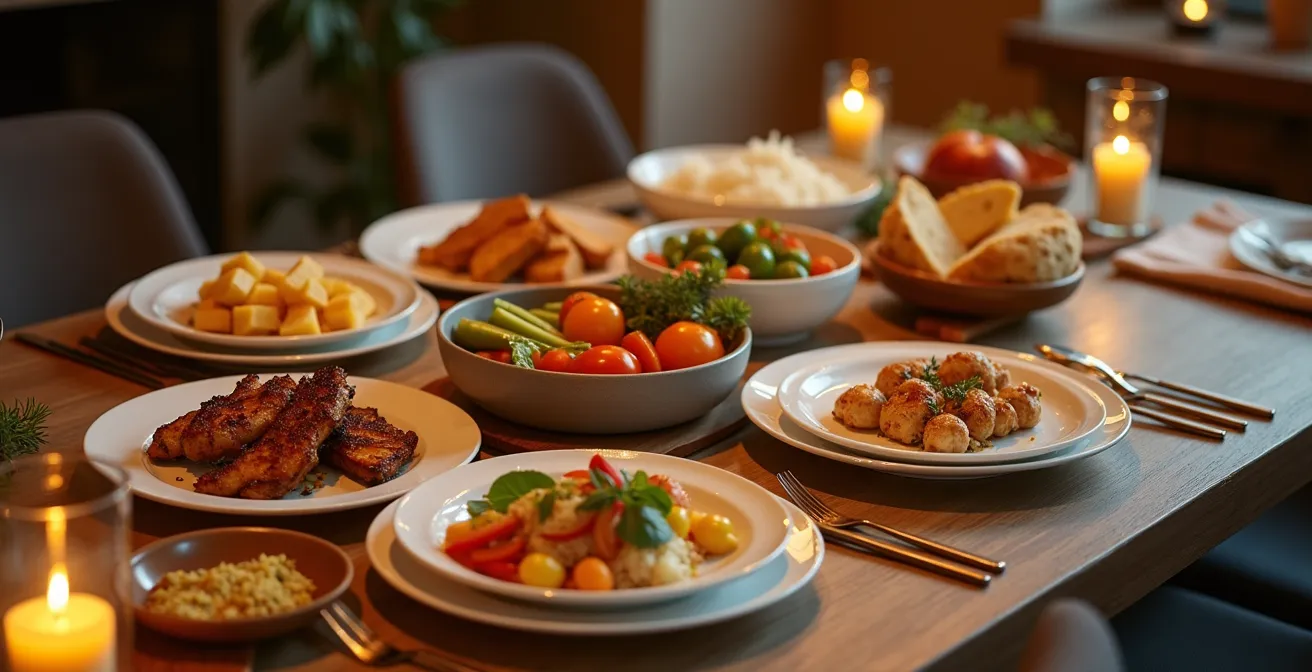
The stress of hosting a keto guest comes from the false belief you must cook two separate meals; the solution is to design one modular meal.
- Instead of separate dishes, serve core proteins and vegetables with carbs and fats as optional, separate “components.”
- Focus on identifying and isolating hidden sugars in common items like dressings and sauces to make the meal truly keto-safe.
Recommendation: Embrace a “Build-Your-Own” format (like a taco bar or grain bowl station) as your default strategy for mixed-diet dinner parties.
That text message every host dreads has arrived: “Can’t wait for dinner! Just a heads-up, I’m doing keto.” Your mind instantly splits into two kitchens. One kitchen is for the “normal” guests, filled with delicious, forbidden carbs. The other is a sad, spartan space with a lone steak and some steamed broccoli. The panic sets in. How do you create a festive, unified dinner party without becoming a short-order cook, running two completely different menus?
The common advice often misses the point. “Just make a big salad” ignores the minefield of sugary dressings. “Cook them something separate” is the very definition of double the work and creates an awkward spotlight on your guest’s plate. The real challenge isn’t the absence of carbs; it’s the fear of social division and culinary segregation at your own table. You want to be a gracious, effortless host, not a frazzled caterer managing special orders.
But what if the secret isn’t about cooking a *separate* meal, but about applying a little strategic design to a *single* meal? The key is to shift your thinking from complete, pre-plated dishes to what we’ll call culinary architecture. This approach focuses on creating a delicious, deconstructed meal where every single guest—keto and carb-lover alike—can build a plate that delights them. It’s a strategy that replaces stress with creativity and ensures everyone feels included, welcomed, and wonderfully fed.
This guide will walk you through that strategic mindset. We’ll start with the ultimate blueprint for a mixed-diet meal, then dive into the details that make it a success, from spotting hidden carb traps to choosing the right ingredients. We’ll even explore the social dynamics of dining to ensure your party feels as good as the food tastes.
Summary: A Strategic Guide to Hosting for Keto Guests
- The “Build Your Own” Taco Bar: The Ultimate Solution for Mixed Diets?
- Why Your “Safe” Salad Dressing Is Actually Kicking You Out of Ketosis?
- Cauliflower Rice vs Konjac: Which Fake Carb Doesn’t Taste Like Rubber?
- Beer vs Tequila: Which Drink Won’t Ruin Your Diet Progress?
- How to Decline Pizza Politely Without lecturing the Host?
- Why Does Your Street Feel 5°C Hotter Than the Park One Block Away?
- Bingo vs Esports: How to Program a Space That Attracts Boomers and Gen Z?
- Grass-Fed vs Grain-Fed: Is the Paleo Price Premium Scientifically Justified?
The “Build Your Own” Taco Bar: The Ultimate Solution for Mixed Diets?
The “Build-Your-Own” concept is the heart of stress-free keto hosting. It’s not just a fun, interactive way to eat; it’s the perfect embodiment of culinary architecture. Instead of presenting a finished plate, you present beautifully prepped components. This empowers guests to construct their own ideal meal, seamlessly accommodating various dietary needs without anyone feeling singled out. With a surprising 5% of American adults following a ketogenic diet, mastering this strategy is becoming an essential hosting skill.
A taco bar is the quintessential example. You provide a delicious, keto-friendly protein base, like seasoned ground beef or slow-cooked barbacoa. This is the universal anchor of the meal. Then, you arrange the accompaniments as separate modules: a bowl of fluffy rice and warm tortillas for the carb-eaters, and crisp lettuce cups and perhaps some cauliflower rice for the keto guest. Toppings like guacamole, salsa, sour cream, cheese, and fresh cilantro are naturally low-carb and enjoyed by all. Everyone gathers around the same spread, creating their own masterpiece. The focus shifts from “what you can’t have” to “look at all the amazing things you can choose.”
Case Study: The Component Strategy
This isn’t just a household hack; it’s a proven professional model. A New Zealand catering company facing diverse dietary requests at events found success with what they called a ‘Component Strategy.’ They offered core proteins like grilled meats and seafood that were universally keto. These were served alongside separate ‘Carb Components’ (like rice and bread) and ‘Keto Components’ (like cauliflower rice and lettuce wraps). According to their findings, this approach reduced food waste by 40% while successfully satisfying all guests.
Your Action Plan: Host’s Prep Timeline for Taco Bar Success
- 24 Hours Before: Marinate your proteins. Choose keto-friendly seasonings for something delicious like barbacoa beef or grilled chicken.
- Morning Of: Prep all the fresh components. Chop the lettuce, dice tomatoes and onions, and wash the cilantro.
- 2 Hours Before: Make your fresh, high-fat toppings. This is the perfect time to prepare fresh guacamole and grate the cheeses.
- 1 Hour Before Guests: Cook the proteins. Warm both the regular tortillas and any low-carb alternatives you’re offering.
- 30 Minutes Before: Assemble the bar. Set up all the components in separate bowls with serving spoons, clearly laid out for easy self-service.
Why Your “Safe” Salad Dressing Is Actually Kicking You Out of Ketosis?
You’ve masterfully planned a beautiful salad, thinking it’s the perfect, safe keto offering. But the success of your strategy hinges on the details, and the biggest saboteur is often hiding in plain sight: the salad dressing. Many commercial dressings, even those that seem healthy like vinaigrettes, are loaded with hidden sugars and starches used as cheap flavor enhancers and thickeners. Ingredients like maltodextrin, corn syrup, or even honey can quickly add enough carbs to disrupt ketosis, turning your “safe” option into a dietary landmine.
This is where you graduate from a good host to a great one. The key is to become a label detective. Turn the bottle around and scan the nutrition facts for “Total Carbohydrates” and the ingredients list for words ending in “-ose” (dextrose, fructose) or any type of syrup or starch. When in doubt, the simplest solution is also the most elegant: provide the components for a dressing. A beautiful cruet of high-quality olive oil, a bottle of red wine vinegar or fresh lemon juice, and salt and pepper allow your guest to dress their own salad with confidence. You can also pre-mix a simple, guaranteed-keto vinaigrette yourself.

The table below highlights some of the most common culprits. It illustrates just how different the carb counts can be and what to watch out for. This isn’t about memorizing numbers, but about understanding the principle: always question the sauce.
| Dressing Type | Carbs per 2 Tbsp | Hidden Sugar Names to Watch | Keto-Safe Alternative |
|---|---|---|---|
| Ranch (Regular) | 2-4g | Maltodextrin, Corn Syrup | Primal Kitchen Ranch |
| Balsamic Vinaigrette | 5-9g | Cane Sugar, Honey | Oil & Vinegar Mix |
| Honey Mustard | 8-12g | Honey, Dextrose | Dijon with Mayo |
| Thousand Island | 4-6g | High Fructose Corn Syrup | Sugar-Free Version |
Cauliflower Rice vs Konjac: Which Fake Carb Doesn’t Taste Like Rubber?
Once you’ve embraced the component strategy, you might want to provide a dedicated low-carb base to make your keto guest feel extra cared for. This leads to the world of “fake carbs,” primarily cauliflower rice and konjac (or shirataki) noodles. The host’s biggest fear here is valid: will this stuff taste like diet-food despair? And will my non-keto guests be repulsed by it? The answer depends entirely on the substitute you choose and, crucially, how you prepare it.
Cauliflower rice is generally the crowd-pleasing champion. Its texture is soft, it readily absorbs flavors, and when prepared correctly, it’s often accepted—or even enjoyed—by non-keto guests. The secret is to remove moisture. Roasting it until golden with butter or oil gives it a nutty, satisfying flavor far superior to sad, steamed versions. Konjac products, on the other hand, are more challenging. Made from a fiber called glucomannan, they can have a rubbery or springy texture that some people find off-putting. While great for dedicated keto followers, they are less likely to be a crossover hit at a mixed-diet party.
When you’re aiming for a unified meal, choosing a substitute with high “guest acceptance” is key. As one host discovered, the right choice can make all the difference.
I served cauliflower rice to 8 guests without mentioning it was a substitute. Only 1 person noticed it wasn’t regular rice, and they actually preferred it! The key was roasting it until golden with garlic butter. The konjac noodles, however, had a 50% rejection rate due to texture issues, even after proper preparation.
– Dinner party host, Texas
Your safest bet is to start with cauliflower rice. It’s a versatile and forgiving ingredient that, when treated with the same care as regular rice, can be a delicious addition to the table that everyone can enjoy.
Beer vs Tequila: Which Drink Won’t Ruin Your Diet Progress?
Your hospitality extends beyond the plate. A thoughtful host considers the entire experience, including drinks. Offering a beverage your keto guest can enjoy without a second thought is a mark of a truly strategic host. While many people know to avoid sugary sodas and juices, the world of alcoholic beverages can be tricky. The wrong choice can undo a guest’s dietary efforts in a single glass.
The main culprits are drinks derived from grains and sugar. Most beers are liquid bread, packed with carbs. A single regular beer can contain more carbohydrates than a keto dieter might consume in an entire day. Likewise, sweet wines, liqueurs, and standard cocktails mixed with juice or syrup are off-limits. The safest and most elegant options are distilled spirits. Tequila, vodka, gin, and whiskey all have zero carbs on their own. The key is what they’re mixed with. A tequila with sparkling water and a squeeze of fresh lime is perfectly keto-friendly and sophisticated. According to nutritional data, the difference is stark: tequila has 0g of carbs per shot versus a regular beer at 13g of carbs per 12-ounce serving.

Instead of just having water as the only “safe” option, set up a small, elegant drink station. A bottle of good tequila or vodka, a pitcher of sparkling water, a bowl of fresh lime wedges, and perhaps some fresh mint creates a mini “build-your-own” cocktail bar. It’s an inclusive gesture that elevates the party for everyone, demonstrating that a restricted diet doesn’t mean a restricted experience.
How to Decline Pizza Politely Without lecturing the Host?
This question, though seemingly from the guest’s perspective, reveals a core anxiety for the host: creating a situation so rigid that a guest has to awkwardly refuse food. The ultimate goal of a strategic host is to prevent this scenario from ever happening. The key is proactive, low-pressure communication before the party even starts. You, the host, can lead this dance with grace and eliminate any potential for awkwardness.
Instead of making a guest guess what’s on the menu, you can send a simple, warm message a few days in advance. This isn’t asking them to dictate the menu; it’s a collaborative gesture that puts you in control while making them feel considered. This simple act transforms the dynamic from a potential confrontation over a pizza slice to a cooperative effort to ensure everyone has a wonderful time. An expert event planner suggests framing the conversation with warmth and options.
Hey! So excited for Saturday. I’m planning the menu and want to make sure you have delicious options. I was thinking of making a build-your-own pizza bar with cauliflower crust options alongside regular – would that work for you?
– Professional Event Planner, Dinner Party Hosting Guide
By proposing a solution that already incorporates the “component strategy,” you’ve done the heavy lifting. This preemptive communication removes all pressure from the guest. They no longer have to worry about how to “politely decline.” You’ve already built a system where their needs are met, making them feel seen and cared for, which is the highest form of hospitality.
Why Does Your Street Feel 5°C Hotter Than the Park One Block Away?
This may seem like an odd question for a dinner party guide, but it holds a powerful metaphor for social dynamics. The street, with its dark asphalt and concrete, absorbs and radiates heat, creating an “urban heat island.” The park, with its grass and trees, remains cool and comfortable. A dinner party can have the same invisible microclimates. A rigid, one-size-fits-all menu creates social “heat”—a palpable tension where a guest with dietary needs feels put on the spot, scrutinized, and uncomfortable.
Your guest might be asking themselves, “Will I have to explain my diet? Will the host be offended if I don’t eat the potatoes? Does everyone think I’m being difficult?” This is the social heat of dietary restriction, and it can make a table feel 5 degrees hotter for that one person. The host’s job is to be the park, not the pavement. You want to create an environment that dissipates that heat and fosters breezy, comfortable interaction.
The “component strategy” is your landscaping. By deconstructing the meal, you create a “social green space.” There is no single, monolithic dish to accept or reject. Instead, there are simply choices. The conversation shifts from “Why aren’t you eating that?” to “Ooh, the guacamole is amazing, have you tried it?” You’ve effectively lowered the social temperature, allowing everyone to relax and enjoy the evening in a cool, comfortable, and inclusive atmosphere. Your strategic planning has made the diet a non-issue.
Bingo vs Esports: How to Program a Space That Attracts Boomers and Gen Z?
At first glance, planning a community center to attract both bingo-loving seniors and competitive-gaming teens seems impossible. Their needs, languages, and cultures are entirely different. Trying to force them into the same activity would alienate both. A host facing a mix of traditional, carb-loving eaters and a strict keto guest faces the exact same challenge on a smaller scale. You’re trying to program one space—your dinner table—for two different “user groups.”
The traditional eaters are your bingo players. They’re comfortable with the classics: the dinner rolls, the roasted potatoes, the pasta. These are familiar, comforting, and expected. Your keto guest is the esports player. They operate under a different set of rules, requiring high-fat, low-carb macros and avoiding sugar and grains. Forcing the esports player to play bingo (eat carbs) will fail. Forcing the bingo players to learn a complex video game (eat only fat and protein) might be met with resistance.
The strategic host, like a smart community manager, doesn’t force one activity. They create zones and offer choices within a shared space. The “Build-Your-Own” taco bar is the perfect example. You have the “Bingo Zone”—the tortillas and rice. You have the “Esports Zone”—the lettuce wraps and extra guacamole. But they both share the central “Community Hub”: the delicious seasoned meat, the fresh salsa, the cheese. By designing the meal this way, you’re not asking anyone to change their game; you’re simply providing the right equipment for everyone to play their own, together.
Key takeaways
- The best strategy is a deconstructed meal (e.g., taco bar) where guests build their own plates.
- Become a label detective to spot hidden sugars in dressings, sauces, and marinades.
- When using carb substitutes, roasted cauliflower rice is a more crowd-pleasing choice than konjac noodles.
Grass-Fed vs Grain-Fed: Is the Paleo Price Premium Scientifically Justified?
As you become a more strategic host, it’s easy to fall down a rabbit hole of food-science debates. You’ll hear terms like grass-fed, organic, or pasture-raised, often associated with diets like Paleo. While the question of whether a “Paleo price premium” is justified is a valid one, it’s critical to remember that it’s not the primary concern for your keto guest. Getting caught up in the wrong details can add unnecessary stress and expense.
Keto is a metabolic state defined by macronutrients—high fat, moderate protein, and very low carbohydrates. While ingredient quality is always great, your guest’s primary need is not a grass-fed ribeye (a Paleo priority) but rather a meal that adheres to these macros. A standard, grain-fed cut of beef with a good fat cap is perfectly keto. In fact, leaner, more expensive grass-fed beef might sometimes be *less* ideal if your guest is struggling to meet their fat intake goals for the day.
Your focus as a host should be on the practical application of keto, not the ideology of adjacent health trends. Instead of spending a premium on a “grass-fed” label, direct your budget and energy toward the things that make a tangible difference for your keto guest: buying high-quality olive oil, real butter, fresh avocados for guacamole, and delicious cheeses. These are the building blocks of a successful keto meal. The true “premium” you offer is not an expensive label on the meat, but your thoughtfulness and strategic planning.
Embrace this mindset of culinary architecture, and you will have transformed from a panicked cook into a confident, strategic host who can welcome anyone to their table with grace and ease. Start planning your next dinner party not as a challenge, but as an opportunity to create a delicious, unified experience for everyone.
Frequently Asked Questions on Hosting for a Keto Diet
How do I prevent cauliflower rice from becoming mushy?
Grate fresh cauliflower, squeeze out moisture with a tea towel, then dry-roast in the oven at 400°F for 15 minutes before seasoning.
Why do konjac noodles have a rubbery texture?
The glucomannan fiber creates the texture. To minimize it: rinse thoroughly, boil for 2-3 minutes, then dry-pan fry before adding to dishes.
Where can I find these substitutes in major stores?
Frozen riced cauliflower is in the frozen vegetable section of most supermarkets. Konjac/shirataki noodles are typically in the refrigerated tofu section or Asian food aisle.